Saturday, February 27, 2010

Bjørndalen's Catharsis


As he glided into place at the shooting range and hoisted his rifle to take aim at the final five targets, Ole Einar Bjørndalen flashed a stare so intense that there could be no mistaking the importance of the moment, or the ferocity of his desire. His ice blue eyes bore down on the targets for a fleeting half-second, then he flipped his hawk's eye blinder down and majestically shot a 'full house,' sending millions of Norwegians and 'OEB' fans around the world into ecstasy.

Yesterday's relay victory was all the sweeter because of the enormous disappointment he has shouldered throughout these Olympic Games, and indeed ever since the 2006 Games in Torino. Although he is the undisputed King of Biathlon, with every possible achievement and statistic to prove it, the fact is that Ole Einar Bjørndalen - despite his famously exhaustive physical and mental training - had cracked under the pressure in his previous eight Olympic events.

In 2002, he foreshadowed Michael Phelps's haul by winning all three biathlon events and the relay - a historic total of four golds out of four. In 2006, however, he was shockingly passed just before the finish line in the 12.5km pursuit and lost gold to Vincent Defrasne. In the 15km mass start, he missed two targets at the final shooting and agonizingly slipped from gold to bronze.

In Vancouver, OEB fans were hoping for redemption, and a restoration of Bjørndalen's infallible image. What happened? An incredible three misses on the very first prone shooting immediately destroyed his chances in the sprint and the pursuit. Two more misses at the final shooting in the 20km caused another bitter choke, as he giftwrapped the gold for his protege, Emil Hegle Svendsen. Finally, an unheard-of seven misses in the mass start led to his worst-ever finish in a World Championships or Olympics, 27th out of 30.

After that unbelievable fiasco, he tried to see the humorous side of his colossal failure, saying, "It shouldn't be possible to shoot that badly." Inside, though, the depths of his despair must have been unfathomable. In the days that followed, he apparently had several phone conversations with a mental trainer as he tried to steel himself for the relay.

As he skied out for the final leg even with Austria's Christoph Sumann, snow falling heavily as it had throughout the relay, the anticipation couldn't have been greater. 40-year old Halvard Hanevold, in his last race before retirement, turned back the clock in the first leg and 21 year-old Tarjei Bø gave Norway a glimpse of its biathlon future with a lightning fast, penalty free second leg. Emil Hegle Svendsen maintained the lead in the third leg, meaning that were defeat to come, it could only have been blamed on Ole Einar.

Hearts were in mouths as he missed twice on the prone shoot, but he coolly reloaded and hit both targets with his extra bullets, while Sumann suffered a melt-down, missing four and so incurring a penalty loop. From then on, Bjørndalen was alone in the pine forest, with only the sound of his skis, his poles and his breathing to accompany him. Oh, and of course, every athlete's greatest nemesis - his own thoughts.

Imagine, then, the pride, the relief and the jubilation when he fired five out of five on that last shoot. The King of Norway, as he gave Ole Einar a congratulatory hug, said, "Did you really need to make it so exciting?" Perhaps, if Bjørndalen truly were infallible, he wouldn't have had to make it so nerve-wracking. But because he is human - "I was nervous before my leg," he said afterwards - the celebration of his achievement is, for me, that much more profound.

Friday, February 19, 2010

Historic Day for Norway!


After a disappointing start to the 2010 Winter Olympics, Norway finally lived up to expectations yesterday with three medals in biathlon: gold from Tora Berger and Emil Hegle Svendsen, and silver from Ole Einar Bjørndalen. Two days ago, cross-country skier Marit Bjørgen broke the drought by winning the sprint for Norway's 99th ever Winter Olympics gold, making yesterday's golds numbers 100 and 101. Norway is the winningest nation in Winter Olympics history with 291 medals (followed by the USA with 237) - not bad for a nation of just 4.5 million people, although they are 'born with skis on their feet,' as the saying goes.

Anette was particularly proud of Marit and Tora for taking the first golds of 2010 and giving the Norwegian women some much-deserved attention. Tora's gold was the first ever by a Norwegian woman in biathlon. After poor shooting in the sprint left her in 33rd for the pursuit, she shot 20 out of 20 targets in that race to move all the way up to 5th - a Herculean effort. In her gold medal 15km run, she hit 19 out of 19 targets (an amazing 39 in a row over 2 competitions) and only missed on the final target, but she was too fast on her skis for anyone to catch her.

The men's race was phenomenally exciting, with both Svendsen and Bjørndalen seeking revenge after dismal performances in the sprint and pursuit. Svendsen, like Berger, hit 19 of 19 but missed his last target, giving Bjørndalen the chance to overtake him with a clean shoot on his final round. However, the King of Biathlon also missed, and had to ski his heart out to cross the line 9.5 seconds behind Svedsen. Bjørndalen's silver gives him medals in championship events (either World Cup or Olympics) in 14 straight years, a longevity record that may only ever be tested by Svendsen, the Prince of Biathlon, 12 years his junior.

So, I've been waiting years to bear witness to such a day, ever since I became hooked on biathlon in Oslo in 2004. Anette and I were screaming at the TV and biting our nails throughout the races, which we watched on BBC but listened to in Norwegian over the internet. Norway couldn't be happier today, and all eyes now turn to the mass start competitions on Sunday and the relays next week.

Wednesday, November 11, 2009

One of the great albums


Today I listened to Strangefolk's 'Lore,' and was reminded how great an album it is. It is truly one of my all time favorites of any genre. Released in 1997 by the Vermont jamband, it's not just the catchy songwriting, great vocals, slick guitar riffs and precision drumming that make it so smooth. On headphones, the bass sounds amazing, bouncy and full of creativity, and I realized that the mix on this album is just perfect for my taste. The whole album is imbued with the joy and happiness of playing music and living life simply, close to nature; things I love best about places like Vermont, New England, Alaska, Africa and Norway. The refrain of the last song might as well be my mantra:

"...I may grow old that's what I'm told but I ain't never gonna die,
cuz we live in and of each other we will remain,
and we give and so discover we will remain."

Monday, August 31, 2009

Vitali Maembe's music


Our good friend Vitali Maembe is teaching this year at the University of Agder in Kristiansand, Norway, after winning a competition in Zanzibar last February. He is a gifted musician and artist whose work is dedicated to social justice, and his voice needs to be heard. Here are links to two of his videos, Asalaam Aleykhum and Afrika Shilingi Tano (filmed by Anette!). Enjoy, and please pass them on:

http://www.soundclick.com/bands/default.cfm?bandID=630408&content=videos&vidID=7557

http://www.youtube.com/user/adklose#play/all/uploads-all/0/yz_vh08qnlQ

Tragic Fire at Idodi Secondary School

We were shocked and deeply saddened at the news of a fire that killed 12 high school students in a village where we spent so much of our time with FORS and made so many good friends. Kate has written a very moving piece on the FORS blog, so please read it and give a donation if possible.

http://friendsofruaha.wildlifedirect.org/2009/08/27/fire-in-boarding-house-ends-in-tragedy-idodi-secondary-school-on-the-road-to-ruaha-national-park/

I also posted about the school on this blog last year: http://mfst.blogspot.com/2008/03/public-high-school-in-rural-tanzania.html

Saturday, August 29, 2009

Our New Home


After an incredible summer and unforgettable wedding celebration with family and friends from all over, we moved to London on August 14 to begin the next AK adventure, our first as husband and wife! Thanks to a couple of Ikea runs, we've now settled into our cozy, tiny flat here in Finsbury Park, and can't believe how easy life seems here compared to living in Africa. I'm adjusting to being a commuter on the Tube, with my iPod and free London newspapers every morning and evening to distract me from the fact that I'm hurtling underground at great speed with a bunch of strangers, and Anette is taking care of all the practical stuff at home, like setting up our wireless internet last Friday.

Highlights of our neighborhood so far are: Finsbury Park itself, a beautiful expanse of green and trees where tons of people picnic, play sports, drum in the still-warm late summer weather, the Larrik pub around the corner that shows all Premier League matches, the melange of shops and restaurants on Stroud Green Rd, and everywhere you go, the amazing diversity of people, languages, clothing and hairstyles from every continent.

Sunday, June 21, 2009

A Taste of Scandinavia and Spain in NYC


We concluded our US vacation with an unforgettable weekend in New York to celebrate Anette's 27th birthday. Mom, Dad and Granny drove up from DC, and Anette, Olivia and I took the metro from Brooklyn to the city, where we met up at The Scandinavia House for a traditional Norwegian dinner. Afterwards, we took a cab to the Winter Garden theatre, where the huge marquee for Mamma Mia (music of Sweden's ABBA) stood out against the black skyscrapers and bright neon lights.

The show was phenomenal, with a great storyline and some hysterical acting, and a wonderful time was had by all. After the show we walked through Times Square, our eyes as wide as the horizon, trying to comprehend the enormity of light, sound and speed, amused by the people lounging in beach chairs in the newly created pedestrian section. I was so happy to walk with my grandmother, 91, at my side, and watch her enjoy the spectacle.

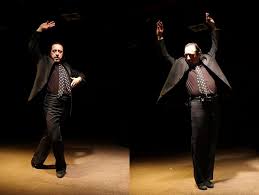
We said goodbye to the "old folks" at their hotel and continued on to W 38th and 8th, where we spotted a dimly lit marquee for the Roy Arias Theater on the side of a nondescript office building. We had come to see our flamenco dance teacher, Jorge Navarro, a native of Granada who's been in NY for 25 years, perform with some of his friends. We took the elevator to the 6th floor, and walked out into a haze of smoke, sweat, loud conversation and guitars strumming. We entered the small, darkened room to find a lively audience of about 100 and a small stage with two guitarists, a singer, and three dancers.

What ensued was the most intimate, intense flamenco show I've ever seen. It is beyond me to describe every footfall, every touch of the guitar, every modulation of the singer's mournful voice, or the passion and emotion of the performers. Olivia, Anette and I were enthralled, in awe, sharing a delicious feeling of having stumbled upon this most underground and most authentic of Andalucian experiences, right in the middle of NYC. Viva la Gran Manzana, y viva el flamenco jondo!

Monday, May 25, 2009

Hospitals North and South


When I returned from Tanzania I found out I had finally gotten malaria (probably in Malawi) and as luck would have it, I got the potentially fatal kind, falciparum. Fortunately, the regional hospital here in Haugesund is totally modern and well-equipped, and one of the doctors is a tropical disease specialist. Thanks to her, the malaria was properly diagnosed, and after four days straight of IV treatment in both hands (and 10 blood tests over those 4 days - I'm no longer afraid of needles:-) I began to get better.

Contrast my experience with that of the average Tanzanian who gets sick or has to go the hospital for any other reason. The NYTimes is beginning a series of 3 articles on childbirth and maternal death in Tanzania, and I highly recommend it. The pictures are particularly gripping, but I can't copy the best ones to put on the blog, so here's the link to the article.

Monday, May 11, 2009

Out of Africa

Well, I never got around to posting again from Tanzania; internet was just too hard to come by. Anyway, we're back now, but here's a clip of our last night in Iringa.

Saturday, January 03, 2009

FORS Video

Happy New Year! I can't begin to express how much I'm enjoying being home, having been in Brooklyn with Olivia, then at the farm with a foot of snow and cross-country skiing every day, and now in Washington with Mom, Dad and Granny. There are so many impressions that I can't even begin to write about it all, so instead, I'm uploading this video about FORS that Anette filmed and we edited together. Enjoy, and I'll start posting again from East Africa in a bit.

Friday, November 21, 2008

Volcanoes National Park


After confronting the worst of Rwanda at the Kigali Memorial Center, we decided it was time to get out of town and see another part of the country. Known as the Land of a Thousand Hills, nowhere is this more evident than in the northwest along the border with Congo and Uganda, where a chain of jungle-clad volcanoes (some still active, like the one that swallowed the town of Goma in a lava flow in 2002) rises up from the fertile valleys to heights of 14,000 feet.

To get there, we took a brand new Toyota Coaster bus on a two-hour trip that wound dizzyingly along high mountain roads. Called the Virunga Express (after the mountain chain) we were amazed that these buses left every half hour on the dot. Chalk it up to the population density or the billions of dollars in foreign aid, but we were shocked – timetables aren’t as reliable even in New York’s Grand Central!

The landscape became greener and more luxuriant as we reached Ruhengeri, with picturesque small farms dotting the hillsides. We also noticed an increase in signs along the side of the road. We asked people what the signs meant, and they explained, “Rwandans, stop the ideology of genocide.” Ruhengeri was a Hutu stronghold in 1994; maybe that’s why so many signs are there today.

When we went to bed, Anette wasn’t feeling well and had a fever (we’d been on the road for two weeks now) but we hoped that after taking some NyQuil and having a good night’s sleep she’d be ready to climb the volcano. In the morning when we reached the ranger station we saw a swarm of white tourists swathed in expensive gear, all of whom were going to see the gorillas, at $500 per person. We picked up three young travelers, who like ourselves didn’t have that kind of money and just wanted to climb a volcano.

The five of us got out at the base of Mt. Bisoke, whose top was hidden in the clouds. Blue-leafed trees stood out magically against the deep green of the jungle vegetation, stone walls lined the farmers’ fields, and cows, sheep and goats grazed the hillsides. “Amahoro,” we greeted the farmers and their children in Kinyarwanda. “Amahoro,” they said back to us with a smile.

We met up with our guide and a Rwandan army soldier who would accompany us with his AK-47. The soldiers conduct regular anti-poaching patrols, but are also there for our safety in case we meet an angry silverback gorilla, forest elephant or buffalo. It was a bit unnerving to look at this cadre of soldiers dressed in camo, faces of steel, holding their AKs, and wonder what they must have done during the genocide.

As we began to climb, the vegetation absolutely engulfed us. The trail was narrow and muddy, and as we brushed aside leaves bigger than our heads, we noticed that our skin began to sting. Nettles and other poisonous plants were all over, vines and moss were hanging from every branch, bushes exploded in all directions, beautiful flowers accented the green with splashes of yellow, white, purple, orange.

It was the perfect gorilla habitat, but unfortunately we saw only saw their droppings. We passed a trail leading to the grave of Diane Fossey, the American biologist who lived in these mountains to study the gorillas and was killed for her anti-poaching efforts. We stopped to breathe the fresh mountain air, looking out over the farms now tiny below us.

After an hour of steep, muddy climbing, Anette turned to me and said she didn’t think she could go on; after being with fever for the last few days, she felt exhausted and not up to climbing. We rested, rallied our spirits, and she continued to trudge on despite her total fatigue. 45 minutes later, she stopped again, but our traveling companions helped motivate her and again she found the strength to continue.

The next time she stopped, I told her to remember her grandmother, who endured freezing winter fishing trips from Norway to Iceland in the 1950s, and that her strength ran in Anette’s blood. Sadly, when we came back to Kigali the next day, we got a phone call telling us that Martha Kyvik had passed away at the age of 100. So on her grandmother’s last day on earth, Anette, despite her extreme exhaustion, found the strength to climb an 11,000 foot volcano. Coincidence?

As we reached the top of the volcano, a cold, wet wind blew through the jungle, chilling us to the bone. When we broke out on top, at 11,000 feet, the sun came out as if to congratulate us, and we sat for fifteen minutes devouring bread, cheese and meat as we stared down into the gorgeous crater lake. In the distance we saw a snow-covered peak. I later read that in November 1993, several teenage girls were abducted and killed high up the slopes of that mountain; one in a series of massacres leading up to the awful climax.

Already caked in mud up to our knees from the ascent, the mud would become the real enemy on our descent. Each of us slipped several times, and I landed flat on my back more than once. We have never been muddier in all our lives. We sank into a profound sleep that night, and when we returned to our Kigali hotel the next day, we gave our shoes, socks and pants a proper bath.

Thursday, November 20, 2008

Post-genocide Rwanda


Tall buildings, shining glass windows, perfectly paved roads, a profusion of signs for clothing stores, sports stores, travel agencies, restaurants…are we in my hometown of Bethesda, Maryland, or is this really downtown Kigali 14 years after the genocide?

As we pulled into the central bus station, a huge outdoor area jammed with buses, minivans, motorcycles and taxis, we saw masses of people walking four and five abreast in all directions – it was as crowded as Manhattan during rush hour. There are 10 million people in Rwanda, but the country is about the size of Rhode Island, which makes for some cramped living. Much of it is mountainous, so the population is concentrated in urban centers like Kigali, Gitarama and Butare, a fact that made it easier for the genocidaires to kill a million people in 100 days in the rainy season of 1994.

At first glance, Kigali’s modern infrastructure belies its recent history – you would never think that these streets were witness to some of the most horrific acts of violence and brutality the world has ever seen. We walked around the city for two whole days marveling at the cleanliness, the newness, the apparent wealth of people, stores and businesses. We saw groups of white tourists being hounded by the ever-present trinket sellers. We saw plenty of cars with bumper stickers that said, “Rwanda is You and Me.”

Taking our cue from the locals, we breakfasted each day on thick green fish soup and read the morning papers. Then we noticed a pattern: genocide is always in the headlines. Even after 14 years, it is still the dominant issue in Rwandan society. Traditional courts called “gacaca” have been set up all over the country, but scarily, there are more than a few stories of gacaca witnesses disappearing and turning up dead weeks later.

Surreal to think that the people sitting next to us at breakfast, at lunch, on the bus, walking by us on the streets, had experienced - and quite possibly participated in - the killing. Bumper sticker slogans aside, what feelings they must still harbor for those who killed their family members, or for those they killed?

On our third day in Rwanda, we steeled ourselves for a visit to the Kigali Memorial Center, completed in 2004 with money from the Aegis Foundation. We didn’t go right away because we didn’t want the genocide to overwhelm our experience of the Rwandan people, but in some ways, the genocide is why we came. The Memorial Center is located at the foot of one of Kigali’s many hills, surrounded by mass graves and beautifully landscaped gardens with roses and fountains.

We took a cab, and when we asked the cabbie what he thought of the memorial he began to shake with nervousness. We didn’t understand all of his broken Swahili, but he seemed to say that the evil on display in the memorial center was still alive and well in Rwanda today. What must it be like for him to drive a steady stream of white tourists to stare at the unthinkable crimes committed by his own people against each other?

The first thing that struck us as we entered the dark hallways was that the written language of the exhibit was Kinyarwanda, with French and English in smaller letters near the floor. We had to get down on our knees to read some of the captions, but we were glad that the museum made the choice to put Kinyarwanda first, for it is most importantly a memorial for Rwandans, not for tourists, so that future generations of Rwandans will never forget, and never repeat the atrocities.

The exhibit begins with ancient Rwandan history, leads into colonialism when the Belgians exacerbated the split between Hutu and Tutsi, then documents the buildup in 1993 of the racist propaganda, inflammatory radio broadcasts of RTLM, the first massacres, and the pleas of the UN commander to the world that were repeatedly denied.

Then the genocide: terrible picture of corpses, copies of the identity cards that condemned people to death, actual weapons – machetes, clubs, knives, guns – still stained with blood, videos of the killings, interviews with survivors. We walked in silence, overwhelmed, angry, heartsick.

Finally we went upstairs, where the exhibit ends with the hall of children: life-sized pictures of beautiful children in the last photo ever taken of them. Below the picture, a small plaque states their name, their families’ memories of them, their favorite food, favorite toys, and then, the way they died…

“Hacked with a machete. Age 6.”
“Buried alive in a pit latrine. Age 4.”
“Thrown against a wall. Age 2 months.”
“Raped and shot in front of her family. Age 11.”

This was my breaking point. Looking at the smiling faces of the children and trying to connect those faces with their incomprehensible means of death, I slumped against a wall and began crying. Anette picked me up and we went out together into the garden with its mass graves, looking out onto the city where just yesterday, streets were rivers of blood and dogs and rats feasted on the bodies of the dead.

Thursday, November 06, 2008

Obama: The Reaction in Tanzania


Living without a television for 15 months has been wonderful in so many ways, but on election night, what we wanted more than anything else was to be back in America glued to the tube. Instead, we settled for text messages.

The first one came from Jake at 5:30am TZ time: “It looks like Obama is going to win:-)” An hour later from my parents: “Obama has won! McCain hasn’t conceded yet, but it’s a given – hallelujah!” An hour later, a text from our Ugandan friend Vinbro who has been talking excitedly with us about the election for over a year now: “McCain has thrown in the towel! Were you watching??”

I had to reply that no, we weren’t watching because we don’t have a TV. But just as we were beginning to feel like history was passing us by, Jake called from the early morning streets of Washington, DC. The noise was so loud I could barely hear his voice, but he was able to tell us that Obama had kicked McCain’s ass, won 330+ electoral votes and all the swing states, and everybody was celebrating his incredible victory and the end of Bush’s Reign of Terror.

Ecstatic, we donned the apparel that Jake had brought for us when he visited in June: a t-shirt with Obama’s face framed in a big O of stars and stripes, and an Obama pin. As we walked down the hill to work, people looked at the t-shirt smiling and we told them the great news.

At work, our colleagues were thrilled for us and we laughed at a catchy Obama reggae song playing on the local radio station. We brought them our copy of “Maisha ya Barack Obama,” (The Life of Barack Obama) written in Swahili by our Tanzanian journalist friend, Maggid Mjengwa, on sale for a dollar on street corners in Iringa. They were eager to read it and to be inspired, saying that Obama is a man who can make anybody – even the poor and the downtrodden – believe that they can succeed.

The texts and phone calls kept coming throughout the morning: Musa Kwanga, a local pastor who helped us bring SODIS to the villages; Zebedayo, a good friend and teacher at Idodi Secondary School; Bahati, another teacher who transferred to the southern city of Mbeya and we haven’t heard from in half a year; Sammy, a young artist from Dar Es Salaam who we met at the Bagamoyo Music Festival.

All of them called - some using their last shillings of credit - to say congratulations and to express their happiness for me, for Americans, for Tanzanians, for the world. It was deeply moving to receive these personal calls on behalf of Obama - it made me feel like he was a close family member - and to see how the force of Obama’s personality has reached as far as the remote villages of Iringa. Later, when we read his speech, we realized that the line, “to all those huddled around radios in forgotten corners of the world,” applies as much to Iringa as to anywhere else.


After work we stopped in at a local eatery and the waitress, who knows us well, complimented us on the t-shirt and asked if we could get her one. The shirt continued to draw attention, with people stopping us on the street to share their happiness and shake our hands. When we saw a man with his own Obama shirt, we had to stop and congratulate him. He had been waiting for this day to get a big silk screen of Obama with the slogan “Change We Need” on his second-hand shirt. Singing Obama’s praises, he pumped our hands vigorously and told us, “This is a man of unity. If they start fighting again in Kenya, Obama will come and end it and they will listen to him!”

We then headed down a side street because I wanted to see a man who, when repairing my flip-flops one day, talked earnestly with me about American politics as we sat in the hot sun and he threaded his needle through the thin rubber of my broken footwear.
He was sitting with a couple of friends on his shoemaker’s bench by the side of the road, and as we approached he said to them with pride, “I told you that my American friend would come see me today!”

A few meters down the road, a teenage girl came running up to us and said she just wanted to look at the Obama shirt. She then broke into a freestyle rap about Obama as she walked beside us and told us she was going to begin studying in our favorite Tanzanian town, Bagamoyo, at the College of Arts.

Our last stop in town before climbing the hill to go home was to see a family that owns a crafts store. The daughter, Upendo (the most common Tanzanian name for women, it means love) saw me and told a customer in the store, “This is the guy who told me that if Obama loses he won’t go back to America!” Upendo’s mother congratulated us warmly and said Obama gives her great hope because she feels that America will succeed now, and if America succeeds, then Tanzania will also succeed.

We never did find a working television; although we wandered around our neighborhood all evening knocking on friends’ doors, we were foiled by strong winds that scrambled satellite signals and then caused a total blackout. So we ended the day by listening to Obama’s speech on our neighbor’s laptop. They had downloaded it from the net, and as we sat there listening to his voice coming through the speakers, I imagined families huddled around the radio listening to FDR’s fireside chats during the Depression.

Now, 70 years later, a man whose name means blessing in Swahili, and who has eaten ugali with his grandmother in his ancestral African village, is the president-elect of the United States of America. Come on, say it with me, “Yes we can.”

Saturday, October 25, 2008

FORS Fieldwork


Dear Readers,

Apologies for the month-long silence, but we’ve been busy moving into a new house, planning our wedding, doing fieldwork with FORS, and going to Bagamoyo last week for a great music festival. Before we continue our East Africa travelogue, here’s a description of what we’re up to these days…

After traveling all of East Africa, we came back to Iringa appreciating it for what it is: a productive regional capital with four universities, plenty of government jobs and a booming central market. It was all the more shocking, therefore, when on our first trip to the field with FORS, we drove just 70 kilometers outside of Iringa town and encountered some of the most desperate living conditions we’ve seen in all of East Africa.

As we descended into the Pawaga valley everything looked like the barren deserts of the Sudan: flat plains that should have been covered in grass were a wasteland of brown earth, and all the bushes and trees were bare. We stopped to eat under the meager shade of a thorny tree, and as we sweated and swatted the flies away hoping for a breath of wind to relieve the heat, we wondered how people out here survive from day to day. The answer for many is pastoralism: tribes like the Sukuma, Gogo, Mang’ati and Maasai keep thousands of cattle, goats and sheep and graze them everywhere, but this destroys the topsoil and leaves nothing but brown dust.

Desolate as this landscape was, it couldn’t have prepared us for the sad state of the biggest of Pawaga’s 13 primary schools. It is located in a village with no water source, so donkey carts trudge four hours to the river and back every day. There are 800 students at the school, and on a good day, five teachers – you do the math. Most classrooms don’t have desks, so 70-100 students sit together on the floor, but as there are no visible routines and no educational resources, there is little reason for them to sit in class at all.

The result is that students mill about the schoolyard all day long in their ragged, dirty uniforms and teachers teach when they feel like it, which isn’t often. Pushing and hitting each other with abandon, the students ran to meet our Land Rover and crowded around to stare at the two wazungu. Our Tanzanian colleague told them to go back to class but they just stood there as if she had been speaking Norwegian.

On this round of school visits, our task was to evaluate students’ knowledge of weather.
To find out what the youngest ones (grades 1-3) knew about the weather, we planned a couple of games: one is to pinch your nose for a minute to see what happens when humans don’t have air to breathe, and the other is to release a balloon to understand that wind is air that’s on the move.

When you enter a Tanzanian primary school classroom, all the students rise together to greet you, hands to their foreheads in a show of respect, and shout “Goooood mooooooorning teeeeeacha!! Hooow aaare yoouuu?!!” If you ask them to sit down, they respond in chorus, “Weee aaare sitting doooown nooow, thaaaank youuuu.”

At first, this might seem like an impressive display of classroom management and student engagement, but it’s really just blind obedience. When it comes to creative thinking and freedom of expression, few dare to speak. This is why FORS tries to introduce interactive games and participatory learning.

When Anette and I stood together in front of this particular class of second graders, they were so excited that they couldn’t keep still or quiet. They were so eager for adult attention that they forgot their obedience. Of course, the color of our skin and the sound of our non-native Swahili spoke louder than anything we were trying to say, but it was clear that these students were not used to following rules and listening to instructions.

There was, however, a bright spot: we decided to lead the students in a rendition of the catchy chorus of the FORS film “Water is Life,” which they had seen in April of this year. With all the students clapping in unison, we sang the chorus several times and were delighted to see that the students knew all the words.

As we drove away full of conflicting emotions about our experience, we were all venting our frustration, talking loudly over each other as the Land Rover bounced along the dusty road. This is the nature of our work with FORS; the goal is to improve the quality of environmental education in these village primary schools, but school itself is an alien concept from an alien culture.

This point was illustrated for us the other day by a 75-year-old man who still remembers what his British teachers used to tell him when he was a schoolboy in colonial Tanganyika: “What an Englishman doesn’t know isn’t worth knowing.” Forced on Tanzania by its colonizers then abruptly abandoned at independence, the public education system has languished like a hippo out of water ever since, growing more and more bloated as national enrollment increases while teacher training, pay and resources remain unconscionably insufficient.

If there’s anything we’ve learned from our 15 months in Tanzania, it’s that change here takes a long time, much longer than we wazungu tend to expect. So, if we measure progress by the Swahili saying “pole pole ndio mwendo,” (slowly, slowly is indeed the way) then maybe it’s safe to say that FORS is making a difference even in the most difficult of its 24 schools.

Sunday, September 21, 2008

Bujumbura to Kigali


The whole time we were in Burundi we didn’t realize we were an hour behind TZ, so when we woke up to our phone alarms at 6:30am to take the bus to Rwanda, it was really 5:30am. A fortuitous oversight, because we arrived at the bus station way too early and so met an incredible man named Negro, driver of the New Yahoo! Express to Kigali.

Negro (pronounced like the Spanish) has a magnetic personality: he is compelling, convincing, and ultimately irresistible. His eyes bulge out when he looks at you and the intensity of his stare and earnestness in his voice command you to listen. His demeanor – the way he walks, his gestures – are effused with power and control. This is a man who knows what he wants and how to get it, and he is exceedingly proud of his job as driver.

After helping us choose the best seats and good-naturedly posing for a picture for my African bus collage in the predawn light, Negro invited us to breakfast at everyone’s favorite Bujumbura café: Boulangerie Trianon. After breakfast we set off on our six-hour trip and Negro put on the first of many cassettes, all of which were excellent, from American country to French folk to Tanzanian Bongo Flava to Burundian gospel. He constantly joked with the passengers, shouting out friendly barbs and bugging his eyes out at them in the rear view mirror, drawing many a laugh. He spoke sometimes in Kirundi but more often in Kiswahili flavored with French.

As we climbed the gorgeous green mountains north of Bujumbura, Anette and I were awestruck at the scenery – endless huge-leafed banana groves, jungle-like vegetation creeping over the houses, and at the higher elevations, blue-leafed trees fluttering like aspen. The houses seemed sturdier and the people a bit wealthier than those we saw along Lake Tanganyika on our drive with Yusto. A difficult life of backbreaking labor, indeed, but a feeling that the people of these mountains belonged in this setting, like Sherpas to the Himalayas.

Overladen bikes struggled uphill or sped downhill past us, and groups of women walked along the road in brilliantly colored fabrics, looking much more like the “waswahili” women of the Tanzanian coast than the city girls of Bujumbura who dress in European fashions. They were the quintessential picture of Africa, carrying everything imaginable on their heads: baskets of cotton, bunches of bananas, bundles of firewood, four-foot stacks of Africa-red bricks, huge bails of newly cut grass, all with a hoe held over their shoulder and a baby slung on their backs. We felt like we were seeing an Africa untouched by time, here in the middle of the continent where few wazungu tread.

We crossed into Rwanda under strict security and Negro told us to put our camera away because people here are still sensitive to outsiders taking pictures. As we stood in the long line waiting for our visas, Negro came up to us and asked for our passports, then disappeared into the Rwandan immigration office. Five minutes later he reappeared with a big grin on his face and handed us our newly stamped passports.

We were now driving on the best highway we’d been on in Africa: perfectly paved and signed, painted with center and side lines and even adorned with curbed sidewalks (a very Western notion) in places. The hills of Rwanda looked much like Burundi, but the stone and brick houses even wealthier, with terra cotta tiled roofs that could have been Italy. Bright billboards sponsored by USAid and the EU dotted the road, attesting to Rwanda’s progress since 1994. It is clear that many countries, in their guilt, have given hundreds of millions of dollars to Rwanda since the genocide.

We stopped for a 15-minute break and Negro took us to a local eatery where we had our first taste of manioc ugali. Ugali is the staple food of East Africa, usually made from boiled corn flour. We found the manioc version much stickier than the corn, but ate happily while Negro fussed over us, making sure we used the proper right hand technique to scoop up chunks of ugali, and ordering the kitchen staff to cut our meat into bite-sized pieces. Just like at breakfast, he refused to let us pay.

Shortly after lunch the Rwandan police stopped our bus and two other vehicles on a downhill slope. The officer insisted on giving us a ticket but he let the two trucks go, piquing Negro’s anger. The two began to argue in loud Kinyrarwanda and Negro became furious when the officer wouldn’t rescind the ticket, so he promised to have him reprimanded. The officer cheekily replied, “no problem, no problem,” in English, and then a female officer who had joined the scene said something that clearly crossed a cultural line. Negro immediately opened his door to get out and confront her, and all the passengers defended him by yelling at her and banging their hands against the windows.

Indignant, Negro drove off with his ticket, but he soon veered off the road to the local police station, where he parked his bus and went to set things straight. At first we were skeptical, thinking it was just going to be a futile battle of egos, but upon reflection we realized that Negro was doing something that took a lot of courage: standing up to the system because he felt he had been wronged.

It took an hour and a half of waiting in the hot mid-afternoon sun, but nobody complained; we sensed that everyone respected Negro as much as we did. When he came back and triumphantly took his place in the driver’s seat, explaining how he had made the officers so afraid that their skin changed color and they rescinded the ticket, everyone roared with laughter and applauded his efforts.

For the next hour as he barreled down the highway with one hand on the wheel and one hand gesticulating wildly, eyes bugging out in the rear view mirror, Negro boisterously recounted the events while the passengers shouted out their approval and delight. And so we reached Kigali with one less African policeman comfortable in his corruption, thanks to the magnetism of a man named Negro.

Sunday, September 14, 2008

Tourists & Thieves


One of the best things about being in Burundi was the feeling that we were exploring a country that few white people ever go to. There is only one tourist shop in all of Bujumbura, and as there are no organized groups of young white travelers or old white retirees, there are no street peddlers who make a living by selling kitschy African trinkets. Due to the lack of tourism, petty thieves haven’t had a chance to hone their pickpocketing skills, something that we discovered on our first walk around Bujumbura’s central market.

Despite the density of people at the market, we wandered through the crowds with ease; no one was pushing or shoving. There was obviously an order to the chaos, so when a man suddenly ran right into my chest and didn’t apologize, I knew something was up. I kept my eye on him as he ran back past us and waited dancing (yes, dancing) on the corner until we came by. As soon as he closed in again, three of his friends appeared out of nowhere and tried to grab us, so I immediately pushed the lead guy backwards with my forearm. Surprisingly, this was enough to dissuade all four of them, and they took off running down the street.

More amused than flustered, we reflected that things might not have gone so well had one of them had a knife, so we resolved to avoid physical contact if thieves approached us again. Sure enough, an hour later, the same scenario began to unfold. This time I acted earlier - I cursed the approaching thief to his face and told him to get lost. While this succeeded in avoiding physical contact, Anette thought my methods too crude, and rightfully so: the F-word is understood all over the world, and a two-meter tall white man shouting it in the streets of Bujumbura is sure to attract more unwanted attention.

By this time, the word was definitely out that two white people were walking around and around the market just begging to be robbed, so we began to make our way back to the hotel for lunch. Before we got there, a few more thieves decided to try their luck…

Two guys came up alongside us as two others snuck up behind. We stopped as soon as we felt their presence and the two from behind kept walking past us. The two beside us, however, stopped as if on cue and simultaneously rested a leg on a cement block, pretending to watch life go by. They looked like hapless FBI agents who had just been caught tailing Tony Soprano, so I walked up to them and greeted them loudly in Kirundi, but got no answer, just downcast eyes. Then I said “Amahoro muhira?” (How is everyone at home?) and one man reluctantly turned his face to me and answered. Then I asked him in Swahili, “Are you a thief?” and he answered hurriedly, “No, no, I’m not a thief.” And that was the end of that comedy.

After lunch we took a walk in a different part of town and were no longer troubled by thieves. However, we became furious when we passed a sign for an NGO that proclaimed: “Providing hope to the hopeless.” As we stood in the street venting to each other about the hopelessness of such organizations, a taxi drove by with the word “nigger” (not “nigga”) emblazoned proudly across its windshield. It was one of those moments that catches you off guard because it is so unexpected and so culturally wrong by your parameters, and it is the unfathomable icing on the cake in a day full of thieves, poverty and thoughts of why Africa is the way it is and what exactly we’re doing here.

Yes, we’ve seen plenty of pirated Chinese 50-in-1 DVDs with titles like “Black American Nigga Money Films 2008” and the odd “Nigga Kutz” barbershop, but this was the first “er” spelling of the offensive word we’d seen. For a white teacher who spent a full week in his Spanish class facilitating a student debate about the use of the N-word, it made me upset, but I know from conversations with many Africans that they don’t understand why it’s offensive. For them, it’s just another piece of American pop culture to be imitated, but for me, it can never be separated from the hatred and violence of American history and the ongoing struggle of Black America.

In the next five minutes after seeing the car, at least five people shouted out “mzungu,” as if to test our acceptance of this quasi-racial term that so often feels derogatory to us. Usually we just ignore it because we know it’s just curiosity, but on some days you just want to scream at people and tell them to stop treating you differently because you look different. It is, I think, one of the most important lessons for white people living in Africa: to know what it’s like to be a minority, and to realize that no matter how well you learn the language and culture, you will always be seen as different.

Saturday, September 13, 2008

Burundian Cuisine


For all the evils of colonialism that survive to this day in Africa, we seem to have found at least one positive byproduct in Burundi – its cuisine. In Tanzania, ruled first by the Germans and then the British, it is impossible to get a good Western meal. Great Indian food is everywhere but it gets old after a few months. Burundi, however, was placed under Belgian rule after the German defeat in WWI, and the legacy of French-Belgian cooking can still be tasted, especially in Bujumbura.

After Yusto helped us check into our downtown hotel, we consulted our guidebook and decided on an upscale restaurant on the shores of Lake Tanganyika. I ordered brochette (kebab – a national favorite) and Anette, fillet mignon. The beef, accompanied by perfect pommes frites, was tender and divinely flavored, our first taste of home in over a year. We could just as well have been sitting at a gourmet café on the banks of the Seine, and we shuddered to think of all the mouthfuls of chewy grey cow we’d stomached in our first year in Tanzania.

We stayed late in the warm night air digesting our meal and staring out over the black lake. When we went to leave, the two guards at the entrance of the restaurant were reluctant to walk down the road to find a cab for us. They confirmed what our guidebook said: Bujumbura nights are still ruled by thieves and armed gangs. Despite numerous police patrols, most Burundians don’t walk around after dark in the capital. Although the guards didn’t seem too happy about it, they agreed that they were less likely to get jumped than we were, so one of them kindly got us a cab.

When we woke up early the next morning, the smell of fresh bread was wafting through our open window. Just like in the old Looney Tunes cartoons, our noses pricked up and led us out of bed and downstairs towards the smell. Sure enough, local hot spot Boulangerie Trianon was right next door, and we sat down in a cozy cafeteria filled with Burundian men starting off their morning as they always do: with a personal pitcher of local coffee, fresh croissants, and omelettes a foot in diameter.

It was as if we had woken up in Heaven. Our breakfast for the past year has been terrible instant coffee and Corn Flakes, the only cereal available in Iringa. With gusto we tucked into our chocolate croissants and enormous omelettes filled with cheese, onions, and real bacon! Anette was thrilled that the fresh bread almost equaled Norwegian standards; quite a compliment considering that even the specialty bakeries in Berkeley didn’t measure up. We took our sweet time savoring the aroma and taste of the strong coffee, and walked out into the early morning with happy stomachs.

The only thing lacking at breakfast was a local newspaper. In Tanzania, the media, while not 100% free, is nonetheless prolific: there are dozens of newspapers in Swahili for sale on every street corner in every town. Most urban Tanzanians, especially men, read the papers every day. In Bujumbura, though, newspapers are nowhere to be seen. The lack of local media (in French or Kirundi) is certainly a consequence of the war - as with other industries, publishing is some 20 years behind the rest of East Africa. We finally found a deli that sold a couple of dailies, but it wasn’t the newspapers that we’ll remember...

The first thing you see as you walk into this corner store deli are two huge refrigerated glass cases containing an incredible selection of meats and cheeses, and shelves lined with mouth-watering snacks and chocolates. Again, we’ve never seen anything like it in Tanzania, and it could have been Paris or Seville or Whole Foods Market, Anytown, USA. Much of the meat and cheese was imported from Europe, but Burundians have clearly developed a taste for the stuff. We visited the deli four times in two days, and each time we drank a cup of fresh local yogurt to refresh ourselves in the heat of the day.

Wednesday, September 10, 2008

Arriving in Bujumbura


The road to Bujumbura drops from the mountainous border down to the shores of beautiful Lake Tanganyika, humid and ringed with fat palms and leafy banana trees. As we continued through the verdant landscape I asked Yusto about the war, and he proudly but solemnly launched into a Burundian history lesson in Swahili, pointing out hilltop forests where rebels used to hide and shoot at people farther down the mountain, explaining how whole classrooms of Hutu children were taken out of school by the army and made to lie on the road, where they were then run over by trucks.

He told us that in Burundi the Hutus were the primary victims of post-independence violence, but now they’ve gained political power, whereas the reverse is true in Rwanda. Interestingly, he referred to himself as “Mrundi,” putting national unity before tribalism. When I asked Yusto how he survived the war, he told us that he fled to Kigoma for a year in 1993 but didn’t like the lack of freedom and the discrimination he felt as a refugee, so he came back and gritted it out with his wife and nine children. Once a bomb fell just 30 meters from their house, but Yusto says you just get used to it.

As we drove, we saw groups of soldiers in army fatigues sitting along the road armed with AK-47s, watching out for robbers and rebels. We also saw the striking Burundian flag, but it was not nearly as prominent a white flag displaying an eagle clutching a rifle and a leafy branch in his talons. Yusto explained that this is the party flag of the new president, Pierre Nkurunziza, and the rifle and branch represent his time in the jungle, when he and his men ate nothing but manioc for ten years.

In his eagerness to tell us about his country, especially his palm oil export business, Yusto literally screamed in my ear throughout most of our trip. He was obviously a successful businessman; he had a five-inch thick wad of bills on the dashboard that he dipped into to buy necessities like fruit, fish and milk, all of which he shared generously with us. Personal relationships are the bedrock of African culture, and Yusto clearly values his: he must have stopped along the road every fifteen minutes or so to greet friends and talk at leisure with them. He taught us how to greet people in Kirundi by saying “Amahoro,” which always elicited laughter and excitement from the locals.

The poverty, however, was some of the worst we’ve seen in our travels throughout Africa and Latin America. The roadside villages were a constant procession of filth, dilapidation and hunger. Beggars crowded our windows each time we stopped, an old man with elephantiasis of the feet stretched out his arms in a plea for us to take pity on his grotesqueness, and a young boy tried to shake Anette’s hand…here is how she experienced it:

“My first impression of Burundi was surprisingly good, nothing like what I expected after reading the ominous warnings of the US and Norwegian embassies. The gorgeous landscape with high mountains, dense green vegetation and big banana trees was a real contrast from Iringa and Kigoma in the dry season. But in the middle of it all was poverty, much more desperate than what we’ve seen until now in Africa. Dirty children, hovels for homes and stores. When we were passing through a slum-like area with muddy roads and people with ragged clothing, Yusto stopped to buy some fruit.

I was absorbed in watching the fruit transaction and didn’t notice that a little hand had pushed its way through the open window where I sat. When I turned my head I saw right into the face of a small boy with sad eyes. Hoping to get him to smile a bit, I grabbed one of his fingers that was resting on the window and pressed gently. That was when I noticed that the finger I had grabbed was as good as dead, like a rag doll’s hand. The boy’s wrist was a stump and his hand just hung there like useless skin. I don’t think I’ll ever forget the sight of that dead hand hanging from the end of a moving arm.”

At dusk we finally reached the outskirts of Bujumbura and realized that if we had been on public transport, we would never have made it to the city before dark. Yusto - just like all the Tanzanians who took it upon themselves to be our guides and caretakers - drove us right to a hotel in the center of town and got out to make sure that the manager gave us a good room for the night. We thanked him sincerely for all his kindness and then went to eat dinner and celebrate our arrival in this alluring country.

Sunday, September 07, 2008

The Burundian Border


Heading north from Kigoma the hills rose higher and the villagers we picked up along the way to the border only spoke Kiha (a tribal language similar to Burundi’s national language, Kirundi). As usual, the camaraderie was jovial despite the claustrophobia and we made friends on our short journey, including a teenager named Shabani from the DRC who was leaving his Tanzanian refugee camp for a week to go see his mother in Burundi.

The daladala dropped us off at the border, a desolate road that snakes its way along a 2000m high ridgeline, and we were grateful that Shabani walked with us through the silent landscape. All we knew about Burundi was that our governments warned against visiting and rebels had bombed the capital in May. We were prepared, though: we had split up our money, stuffed it into socks, bras, and waistbands, and agreed that if the rebels took our passports we would get new ones at our embassies.

The silence at the border was the first sign that Burundi is unlike any other country we’ve visited. At every other African border we’ve crossed (Morocco, Senegal, Gambia, Zambia, Rwanda, Uganda and Kenya) hordes of money-changers, petty thieves, tour guides and sellers of odds and ends make their living. These border towns have lives and economies of their own; they feed off the constant stream of cars, trucks and people who cross every day. But Burundi’s borders are eerily still, cut off from the rest of Africa by mountains, lakes and a recurrent civil war that began in the early ‘60s and ended with a tenuous peace agreement in 2006.

Shabani walked with us to the “old bandas,” where our passports were first checked, but the official border post had been moved during the war so we hopped on another bus to get there. The 20-minute ride took us past a repatriation camp, a gated compound with a gleaming corrugated metal fence surrounding the UNHCR and Red Cross offices, and cookie cutter tin houses for the refugees outside the fence.

Burundians were the first refugees to come to Tanzania in large numbers. This was in 1972, during a particularly violent wave of Hutu-Tutsi killings that left 200,000 dead in just three months. As the conflict continued to flare up throughout the ‘70s and ‘80s, hundreds of thousands of Burundians fled to Tanzania, and this, combined with the influx of Congolese in the 1990s, has given Tanzania the distinction of hosting more refugees than any other African country. Just this week, however, the Tanzanian government made a historic decision to grant citizenship to 76,000 Burundian refugees who have been living in Tanzania for almost four decades.

Shabani was at first denied entry into Burundi, but the guards said with a big smile that he could pass if his white friends paid $10 on his behalf. Not willing to support corruption, and sure our friend could handle himself, we left him and walked to the middle of town to catch a bus. At the bus station people stopped what they were doing, stared, and then they stared some more. It felt good to find a place in Africa where white people aren’t a common sight. There is no tourism in Burundi as yet - the only wazungu are Belgian and French aid workers who travel by plane or expensive Land Cruiser.

Proud as we were to be entering the country via local transport, we began to worry when we found out that there were no more buses going the 150km to Bujumbura. Extreme height and whiteness, however, come in handy in such situations: I soon flagged down a smallish red SUV and scored a ride from a wealthy Burundian businessman named Yusto. Shabani had at this point made it past the border guards, so we reciprocated his earlier kindness by getting him a seat in Yusto’s car.

Five minutes into our trip a man and his young son whizzed by us on a heavily loaded bicycle, going way too fast and out of control down a steep mountain highway. Yusto suddenly pulled over, stopped the car and covered his eyes. Sure enough, the bike fishtailed violently and the man jumped off while his son was thrown to the cement. Yusto, hands still over his eyes, asked us, “Did he die? Did he die?” but miraculously both were apparenty unhurt. Yusto then got out of the car and began screaming at the man, berating him for having been so careless with his child on such a dangerous road.

It was a harsh reminder that these are the risks poverty forces people to take: to ride an ancient bike heavily loaded down a steep mountain road with your child on the back, forced to transport whatever you can however you can to get a few thousand francs a day to survive.

Wednesday, September 03, 2008

Crossing Tanzania, Part Five


We knew we were close. Our flashlight-guided ride the night before had brought us to within a couple hundred kilometers of Kigoma, so we slept late, had a leisurely breakfast of tea, toast and eggs, then walked up the red road past the purple jacarandas and earthen buildings with dust-caked tin roofs to the daladala station. It was now more than 50 hours since we boarded our first bus in Dar.

As the morning sunlight filtered in through the windows of our bus, young men struggled to stuff huge bags of cornmeal behind our seats and another man clutched a frightened chicken in his lap. We struck up a conversation with the woman sitting in front of us and noticed that her Swahili was flavored with French. She told us how she fled her native Burundi 15 years ago after her entire family had been killed in the war, and had made her living at odd jobs in Tanzania, in and out of refugee camps, ever since.

What could we say? She was clearly still in pain, so we gently shifted the subject. As we started our journey other passengers engaged us in conversation, curious to know what we were doing here. One man was so thrilled that we spoke Swahili that he bought a bunch of bananas and handed us two. Later he gave us two guava melons so we thanked him and shared our peanuts.

Each time we stopped along the side of the road, rural villagers, especially women and children, called to each other to come see the wazungu in the daladala. We beckoned to them, saying, “come and greet us!” at which point they hid behind each other giggling and urging the bravest one to run up to our bus.

The trip - although we had been told two hours and it turned out to be four - was a pleasant one thanks to the camaraderie among the passengers. However, our daladala was small and low to the road and we were eating dust the whole way. Another disadvantage of the low carriage was that we felt the bumps more acutely – the last 100 km or so to Kigoma proved to be the worst of the whole three-day trip. The daladala shook with such ferocity that we struggled to stay in our seats: our ears and our backsides ached from the relentless rattling of old, thin metal.

Ten kilometers outside of town a miracle happened: we met paved road for the first time in two days. It was a bit of cruel irony; I mean, really, why even bother to pave the last 10km? When we pulled into the daladala station covered in red dust, our Burundian mama called us a cab and got in to make sure we found our way to a decent guesthouse. Again, the selfless kindness and care for others that characterizes African society.

We stayed in Kigoma for five days, and every day we ate fresh “mgebuka” from Lake Tanganyika, quite possibly the world’s tastiest fish. Roasted whole, I even ate the tail and head - eyes and jawbone included - because it’s just that good. I also killed a four-foot long snake (yes, it was poisonous) with the help of a couple of Tanzanian employees of our guesthouse. The snake slithered into the room next to ours (thank God I saw it) and we spent about 20 minutes darting in and out of the room, throwing bricks and poking with long sticks, to roust the snake from his hiding place before one well-placed slide of a long metal pole severed his body against the concrete wall.

And so ended our traverse of Tanzania. Our East African adventure was just beginning, though: unknown Burundi was waiting just beyond the mountains.