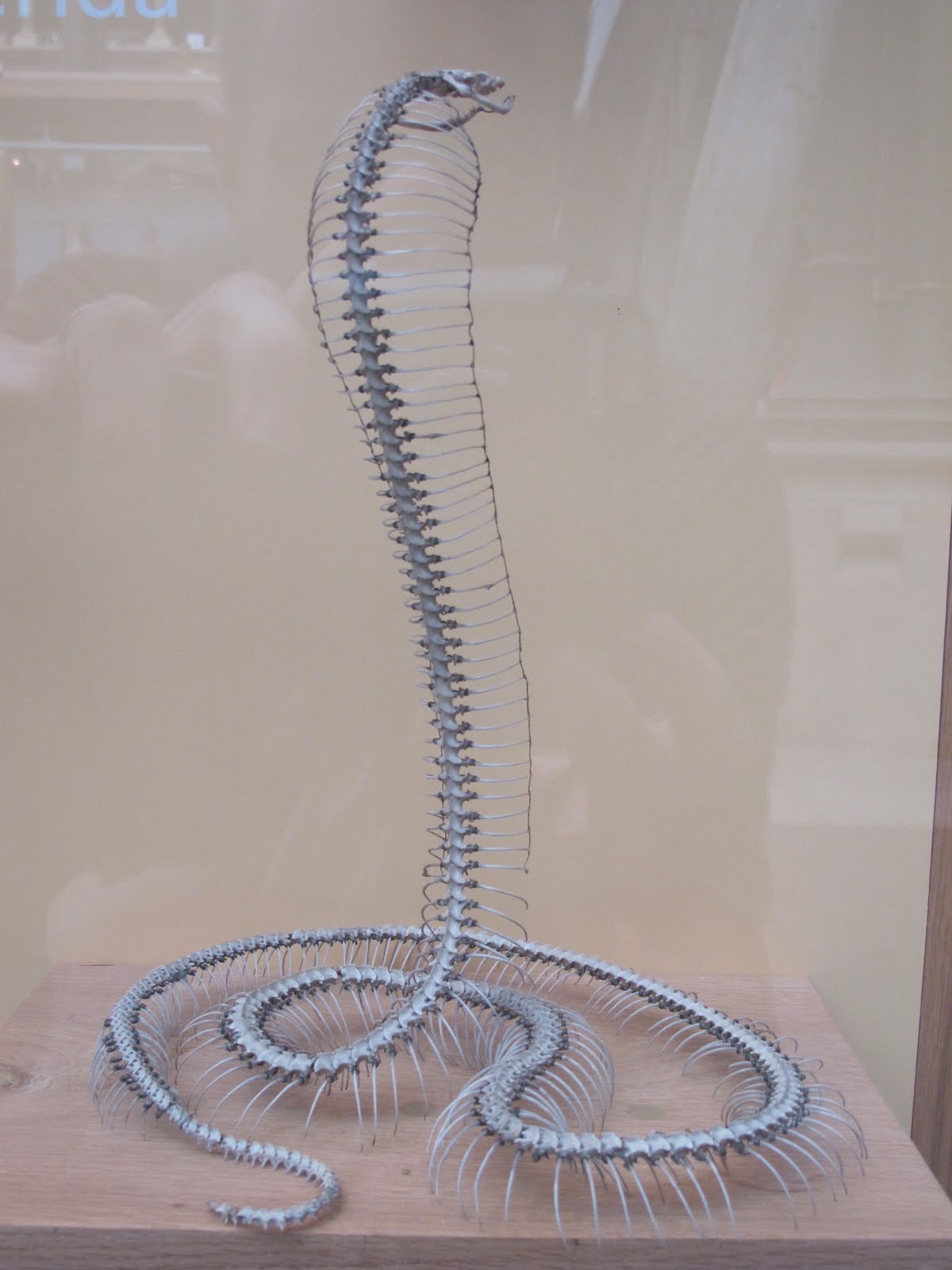
Thanks to a great suggestion from Olivia, who visited Oxford on her trip with the Victorian Society of America, we visited that famous English town for the first time last week. I'll let the pictures from the Natural History Museum do the talking here. Suffice it to say that we could have spent hours staring at the manifold mind-blowing collections, displayed with reverence and decorum in this venerable old building with a thousand moorish arches reminiscent of the mezquita in Cordoba. The birds and butterflies are enough to make anyone want to become a biologist (a 19th century one, at least) and as for the anthropologist (or anthropophagist?) real shrunken heads are also on display, complete with a detailed description of how certain Amazonian tribes removed, heated, shrank, and sewed together again the skins of their victims!!
Welcome, Bienvenidos, Karibuni, Velkommen to the world of all things related to AK: Klose and Kyvik, New York and Norway, Musica y Deportes, Berzerkeley, Tanzania, London etc...
Monday, August 02, 2010
The Oxford University Museum of Natural History
Thanks to a great suggestion from Olivia, who visited Oxford on her trip with the Victorian Society of America, we visited that famous English town for the first time last week. I'll let the pictures from the Natural History Museum do the talking here. Suffice it to say that we could have spent hours staring at the manifold mind-blowing collections, displayed with reverence and decorum in this venerable old building with a thousand moorish arches reminiscent of the mezquita in Cordoba. The birds and butterflies are enough to make anyone want to become a biologist (a 19th century one, at least) and as for the anthropologist (or anthropophagist?) real shrunken heads are also on display, complete with a detailed description of how certain Amazonian tribes removed, heated, shrank, and sewed together again the skins of their victims!!
Steven Sogo, Burundian Musician
Definitely want to let all who are interested know about this great young musician from Burundi. Jake and I saw him perform last week in the basement of a Moroccan restaurant in Savile Row in the heart of London, and we were both very impressed. He's got a great voice, good back-up harmonies, and everyone in the band constantly switches instruments. His music and spirit remind me of Vitali Maembe, who I'm pleased to report is becoming better known in Tanzania. The more the world knows about African artists like these, and the more their voices are heard, the better for us all.
Although it was a shock for us to move to London from Iringa, we're starting to get used to some of the perks, like seeing great concerts and musicals whenever we want to. In the past three weeks we've seen three great African shows - Steven Sogo, Youssou N'Dour and High Priest Safro Manzangi at a Congolese independence celebration. To our delight, both Safro and Steven sang in Swahili - Safro's was an old folk song about Patrice Lumumba that he remembered from his youth, and Steven's song in Swahili was 'Kaza Mwendo,' reminding us to live in harmony with the slow pace of life (maisha ni pole pole). His new album is called 'Il est beau mon pays,' a sentiment to which we can wholeheartedly attest: Burundi is a gorgeous country with wonderful people whose kindness really stood out during our three-week tour of East Africa.
Kaza Mwendo isn't up on YouTube yet, but here's another of his videos, enjoy!
http://www.youtube.com/watch?v=D9Q9UVk8b3g&feature=related
Saturday, July 17, 2010
Swiss Bliss
For our wedding present, Anette’s friend Julia invited us to Switzerland to stay at her family’s Alpine cabin in the Appenzell region, close to the German border. The morning after seeing Love Never Dies here in London, we woke up at 3:30am to catch a flight into Zurich airport - a sleek, Bauhaus-inspired building - where we were met by Julia, who accompanied us on the short train ride to her hometown of Winterthur.
On our first day we took a pleasant bike ride through town to the river, where we spent hours lying about and chatting in the refreshing shallows, enchanted by the sunshine, the leafy patterns among the tall trees guarding the riverbank, and the smooth stones of the riverbed.
We got to know Julia's parents, lovely people who don't have cell phones and don't drive cars, choosing instead to take time for life's slower pleasures, like preparing the most delightful fresh yoghurt mix for the whole family every morning, filled with fruits, nuts, grains and berries. Spiritual and physical health are cherished in their household, values that were clear to us despite our lack of understanding of Swiss German. We shared many a laugh as Julia's parents tried out their English and Anette strove to refresh her German while we both made forays into the local dialect. With their blessing the four of us (including Julia's boyfriend Ben) departed the next morning for the family cabin.
A scenic train ride took us to the town of Urnasch, where we stocked up on supplies for our four-day stay at the cabin, built in the 1950s by Julia’s grandfather, a carpenter. From Urnasch it is a steep hour-long climb to get to the cabin at 1500m, surrounded by snow-capped, cloud-ringed bergs that reach as high as 2700m.
Although the clouds and the quick-changing Alpine weather foiled our attempt to climb the highest peak, we had wonderful long walks every day, following the Wanderweg through farmers’ fields and forests, down into lush valleys and up again onto high ridges covered in wildflowers. In the grand Swiss tradition, mountain huts await the hungry hiker on most every scenic summit, where we partook gladly of the hospitality and the local cheeses, bread, salami.
The famous Swiss cows, brown, grey and white, were ever-present on our walks, their rustic bells clinking and jangling with every curious footstep. In the Appenzell, as all over the Swiss countryside, one can walk up to any dairy barn and buy fresh milk for less than a dollar per liter, a treat that we indulged in as often as possible. At night, as deep blue dusk enveloped the valleys, we sat out on the porch of the cabin and listened to the sounds of the cows' bells from valleys near and far, an ancient and natural symphony on long-play over the centuries.
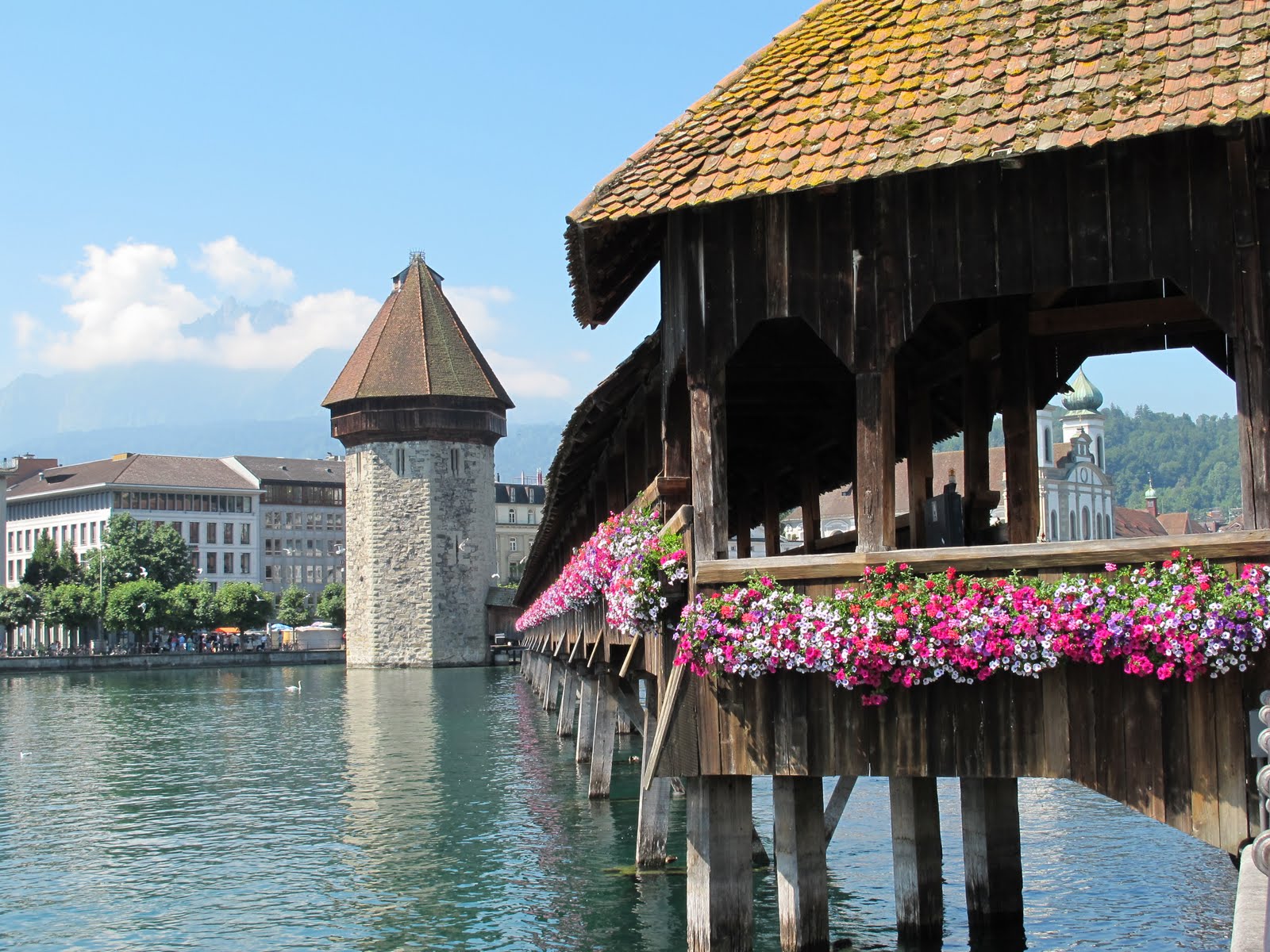
We concluded our trip with a visit to Luzern, a beautiful old city with ornately decorated buildings (including paintings on the undersides of the eaves) and a covered wooden bridge from the 14th century that was sadly ruined by fire in 1993, but has been well restored. From Luzern we took a 100-year old steam-powered river paddler (a la Mark Twain) around Lake Luzern, which looks in places the fjords of Western Norway. All in all, our time in Switzerland was a much-needed break from workaday life in London, and we are grateful to Julia, Ben and the Weilenmanns for making us feel so at home.
Friday, July 02, 2010
Love Never Dies

What a treat to be in London, the only place in the world right now to see the sequel to our favorite musical! Ramin Karimloo stole the show as the Phantom and West End debutante Sierra Boggess was divine in the title aria. All you New Yorkers will have to wait until November to see this compelling work. It was a wonderful way to celebrate Anette's birthday (belatedly) and our 11-month wedding anniversary. We're off to Switzerland tomorrow with the music still lifting our spirits.
Wednesday, June 23, 2010
USA Wins 1-0!!


Destiny? Two months ago I posted about two American footballers who made a real impact in England this season - Clint Dempsey and Landon Donovan. Today I have the honor of posting about a historic World Cup win for the United States, secured in the dying minutes of the match by Donovan on a rebound from a Dempsey shot.
I celebrated the victory with several colleagues from Southbank - two Englishmen, a Spaniard and another American - at a nearby pub called the Old Swan. I had watched the USA's amazing second-half comeback against Slovenia there, and the bartenders and owner remember me for jumping out of my seat and running screaming across the pub to celebrate the goal that put us up 3-2. Of course, the goal was disallowed and all the Brits had a good laugh at my expense.
However, I reminded the bartender of my celebration yesterday, and he agreed to air the USA game just for me if I promised to celebrate like that again. And so it was that my colleagues and I sat watching England on two big screens and the USA on another, watched only by the handful of other Americans and the lone Algerian in the pub, with whom I shared a pleasant back and forth throughout the match.
Everyone cheered for England when they scored in the first half, but that meant the pressure was on for the USA to win. After yet another unjustly disallowed goal in the first half and too many missed chances in the second, I was thoroughly depressed and resigned to our fate. I complained to my English friends about how unfair it was, and how the referees should never be able to affect a nation's performance like this. "That's nothing," they told me. "Real injustice and real heartbreak is watching your team get to the World Cup semis and losing to the Hand of God!"
Well, perhaps there was some divine intervention in our favor today, because we certainly deserved this one as much as we did the last. When Donovan hammered home from Dempsey's rebound, I jumped wildly around our area screaming, hugging and high-fiveing everyone in sight. When the BBC cameras cut to some Americans in the crowd with a 'Yes We Can' sign, I took up the chorus and led our contingent in an exuberant 'Yes We Can' chant that surely amused all the Brits in the pub.
After all, we don't have any football songs like they do here, but if the USA continues on its current form, I may just have to write one.
Monday, June 07, 2010
Rage Against The Machine

I just returned from a testament to the power of music, the power of the people, and the power of grassroots organization to foment revolutionary ideals and action. Rage Against The Machine played a free thank-you concert in Finsbury Park, next to our house, and although I didn't have a ticket, I wanted to at least get close enough to feel the noise.
The concert was a tribute to a UK campaign to knock the X-Factor single from the #1 slot at Christmas. The X-Factor is Simon Cowell's creation, Britain's version of American Idol, and it's all about manufacturing cheezy pop music. Fed up with five years in a row of X-Factor #1 singles at xmas, a British couple started a Facebook campaign to get as many downloads as possible of Rage's "Killing in the Name of." Ultimately, Rage pulled off a totally unexpected upset and got the #1 slot, with over 500,000 downloads to the X-Factor's 450,000.
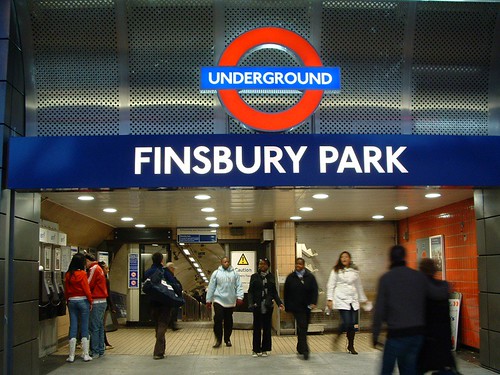
So at 8:30 this evening, having struggled with report writing all day, I walked across the bridge over the train tracks and into Finsbury Park. The usual suspects ringed the concert area - punks, drunks, potheads, dreadheads, and square-looking people like me whose appearance belied a more colorful youth:-)
As the first booming bass notes sounded, the crowd inside the gated area screamed, and those of us without tickets on the outside strained our necks and searched for higher ground to get a glimpse of the giant TV screens. I was happy enough to be this close to one of the most hardcore and inspirational bands of my time, and I bobbed my head and played my air guitar along with tunes like 'Bombtrack' and 'Bulls on Parade,' remembering the good old 90s and all my high school memories.
But then, as the band launched into 'Know Your Enemy,' I decided to see if I could get closer, and it turned out I wasn't the only one with this idea. A shirtless drunk guy went running through police cordons and yanked down a set of temporary chain-link fencing separating us from the main gates. A woefully obese security guard yelled at him, saying "I'm gonna get you!" but the drunk guy continued his rampage, hauling down section after section of fencing. By this time, people had begun streaming over the downed barrier and mounting an assault on the main gates, giving each other a leg up and triumphantly climbing atop the gate to celebrate before hopping down on the inside to be part of the show.
The police were frantically trying to blockade people right and left, but as at the Woodstocks of the 60s and the 90s, the streams of freaks couldn't be stopped! So many people were breaching the gates in so many places that the police finally gave up and let everyone through. It was a magical moment, and I was ecstatic to enter the fray of waving hands and thrashing bodies.
The band played for another hour, and I was mesmerized by every sound, until they stopped to bring onstage the couple who began the campaign. Everyone cheered, and then Rage announced that they had donated 100% of the profits of those 500,000 downloads to Shelter, a charity for the homeless in the UK. We all roared our appreciation as the band handed over a giant check for the couple to give to Shelter, and I noticed that Tom Morello's guitar was graffitied up with the words "Arm the Homeless," in the grand tradition of musical political revolutionaries like Woody Guthrie, whose guitar was famously scrawled with, "This machine kills fascists."
Fittingly, the show ended with a full-blooded rendition of the track that inspired this unlikely campaign, and upon leaving the people swarmed over and through any gates that police refused to use as exits. So many lines of Zack de la Rocha's militant poetry could describe this evening perfectly, like when we watched the chain-link fence being hauled down as he was raging:
"Yes I know my enemies,
they're the teachers who taught me to fight me
Compromise, conformity, assimilation,
submission, hypocrisy, brutality, the elite
All of which are American dreams,
all of which are American dreams..."
But the most fitting of all had to be when the entire crowd screamed along with him at the climax of Killing in the Name of... and if you don't already know those words by heart, I suggest you download the single:-)
Monday, May 17, 2010
Happy Birthday Norway!
Today is 'Syttende Mai,' Norway's favorite national holiday. Officially, it is Norwegian Constitution Day, but for an American like me, the celebration seems a whole lot more like the 4th of July than does the celebration of Norway's independence day on June 7. The story is complicated but fascinating, and it begins over 1000 years ago.
In 872 Harold Fairhair - whose monument stands in Haugesund, where he is buried - unified all the Norwegian provinces under his leadership, becoming the first king of the fledgling nation. Legend has it that Harold's beloved refused to marry him before he was 'king over of all Norway,' and so he vowed not to cut his hair until he had achieved that goal, hence the name Fairhair. Norway grew in size and power throughout the Viking Age, but was unified with Sweden in 1319 and then Denmark in 1376. Ravaged by the Black Death, all three countries eventually entered into the Kalmar Union in 1397 and so consolidated power under one monarch. Sweden broke out of the union in 1521, leaving Norway to endure a '400-year night' under Danish rule.
In 1812 Denmark-Norway was attacked by the British and sought protection in an alliance with Napoleon. The alliance proved unable to prevent the cession of Norway to Sweden in 1814, but Norway took this opportunity to declare its independence. On the 17th of May, 1814, Norway signed a constitution (the second oldest still in use today) and elected Crown Prince Christian Frederik King. This sparked a short-lived war between Norway and Sweden, who fought until November of that year, at which point Sweden realized its military was too weak, Norway realized it had run out money, and both countries realized that their coasts were blockaded by British and Russian forces. And so Norway and Sweden entered into a union that preserved Norway's constitution, until Norway finally gained outright independence (peacefully) on June 7, 1905.
So, there you have it. Today may not exactly be Norway's birthday, but it sure feels like it. Norwegians of all ages will be wearing their traditional 'bunad' and marching in parades, eating hot dogs and ice cream from sunup til sundown. Last year was supposed to be the first time in our 7.5 years together that we got to celebrate Syttende Mai with Anette's family in Haugesund, but our plans were foiled by my 104°F malarial fever! I've attached some pictures from Haugesund Hospital last year, where I was thrilled to have such well-dressed visitors stopping by to cheer me up.
Gratulerer med dagen, alle sammen!!!! Skulle ønske vi var hjemme nå, her er det ingen helligdag og vanlig jobb på oss...Men skal kose oss med kjøttkaker til middag og is til dessert:) Stor klem til alle kjente og kjære og ha en strålende syttende mai!!!
Tuesday, May 11, 2010
A Curiously Casual Handover

Great Britain was surprised this evening by Gordon Brown's sooner-than-expected resignation, delivered at a lectern hastily placed outside the front door of 10 Downing Street at about 7:30pm local time. Helicopter shots showed the magnificent Houses of Parliament and Westminster Abbey gleaming in the late sun, the Thames sparkling beneath them, and then tracked Mr. Brown's black Jaguar as he made the short drive to Buckingham Palace to formally resign and recommend that the Queen ask David Cameron to form a new government.
BBC commentators remarked on the wondrous spectacle of the peaceful transfer of power, which is immediate here - no transition period like in the US. David Cameron is now the 12th Prime Minister of the Queen's reign, but that didn't keep his silver Jaguar from getting stuck in traffic on its way to Buckingham Palace! He was stopped next to a red double-decker bus (the #91, headed for our neighborhood!) and was immediately set upon by 'commoners' who came right up to the window of the car to wave and take pictures.
I was shocked, as this would never have happened even in pre-9/11 America, because 1) we would have had a motorcade of siren-blaring cops to clear the way, and 2) the secret service would have ensured that no one got within 100 yards of the new leader. Upon reflection, especially considering that London has seen its share of terrorism, I find it charming that Britain chooses to treat its leaders just like anyone else.
As Mr. Cameron arrived at the royal palace, it was noted that the two Queen's Guards posted outside did not salute his vehicle, whereas they had saluted Mr. Brown's as it left. However, their salute on his way out after a 20-minute audience with the Queen confirmed that he had indeed been confirmed as the new PM. The official announcement was that the agreement had been reached with a 'kissing of hands,' a point that was hotly debated by the BBC. It turns out that this is simply a reference to an ancient custom, and that the Queen and Mr. Cameron did not actually kiss each other's hands.
And so dawns a new political era in Great Britain, not with a bang but a whisper.
Sunday, May 09, 2010
The Black Tea Party & White Privilege
I haven't written a great deal about politics on this blog, but I am becoming more and more upset by the virulent attitudes and actions of so many white Americans towards President Obama and the government. I'll let Tim Wise's words do the talking here:
"Imagine that hundreds of black protesters were to descend upon Washington DC and Northern Virginia, just a few miles from the Capitol and White House, armed with AK-47s, assorted handguns, and ammunition. And imagine that some of these protesters —the black protesters — spoke of the need for political revolution, and possibly even armed conflict in the event that laws they didn’t like were enforced by the government? Would these protesters — these black protesters with guns — be seen as brave defenders of the Second Amendment, or would they be viewed by most whites as a danger to the republic? What if they were Arab-Americans? Because, after all, that’s what happened recently when white gun enthusiasts descended upon the nation’s capital, arms in hand, and verbally announced their readiness to make war on the country’s political leaders if the need arose.
Imagine that white members of Congress, while walking to work, were surrounded by thousands of angry black people, one of whom proceeded to spit on one of those congressmen for not voting the way the black demonstrators desired. Would the protesters be seen as merely patriotic Americans voicing their opinions, or as an angry, potentially violent, and even insurrectionary mob? After all, this is what white Tea Party protesters did recently in Washington.
In other words, imagine that even one-third of the anger and vitriol currently being hurled at President Obama, by folks who are almost exclusively white, were being aimed, instead, at a white president, by people of color. How many whites viewing the anger, the hatred, the contempt for that white president would then wax eloquent about free speech, and the glories of democracy? And how many would be calling for further crackdowns on thuggish behavior, and investigations into the radical agendas of those same people of color?
To ask any of these questions is to answer them. Protest is only seen as fundamentally American when those who have long had the luxury of seeing themselves as prototypically American engage in it. When the dangerous and dark “other” does so, however, it isn’t viewed as normal or natural, let alone patriotic. Which is why Rush Limbaugh could say, this past week, that the Tea Parties are the first time since the Civil War that ordinary, common Americans stood up for their rights: a statement that erases the normalcy and “American-ness” of blacks in the civil rights struggle, not to mention women in the fight for suffrage and equality, working people in the fight for better working conditions, and LGBT folks as they struggle to be treated as full and equal human beings.
And this, my friends, is what white privilege is all about. The ability to threaten others, to engage in violent and incendiary rhetoric without consequence, to be viewed as patriotic and normal no matter what you do, and never to be feared and despised as people of color would be, if they tried to get away with half the shit we do, on a daily basis."
"Imagine that hundreds of black protesters were to descend upon Washington DC and Northern Virginia, just a few miles from the Capitol and White House, armed with AK-47s, assorted handguns, and ammunition. And imagine that some of these protesters —the black protesters — spoke of the need for political revolution, and possibly even armed conflict in the event that laws they didn’t like were enforced by the government? Would these protesters — these black protesters with guns — be seen as brave defenders of the Second Amendment, or would they be viewed by most whites as a danger to the republic? What if they were Arab-Americans? Because, after all, that’s what happened recently when white gun enthusiasts descended upon the nation’s capital, arms in hand, and verbally announced their readiness to make war on the country’s political leaders if the need arose.
Imagine that white members of Congress, while walking to work, were surrounded by thousands of angry black people, one of whom proceeded to spit on one of those congressmen for not voting the way the black demonstrators desired. Would the protesters be seen as merely patriotic Americans voicing their opinions, or as an angry, potentially violent, and even insurrectionary mob? After all, this is what white Tea Party protesters did recently in Washington.
In other words, imagine that even one-third of the anger and vitriol currently being hurled at President Obama, by folks who are almost exclusively white, were being aimed, instead, at a white president, by people of color. How many whites viewing the anger, the hatred, the contempt for that white president would then wax eloquent about free speech, and the glories of democracy? And how many would be calling for further crackdowns on thuggish behavior, and investigations into the radical agendas of those same people of color?
To ask any of these questions is to answer them. Protest is only seen as fundamentally American when those who have long had the luxury of seeing themselves as prototypically American engage in it. When the dangerous and dark “other” does so, however, it isn’t viewed as normal or natural, let alone patriotic. Which is why Rush Limbaugh could say, this past week, that the Tea Parties are the first time since the Civil War that ordinary, common Americans stood up for their rights: a statement that erases the normalcy and “American-ness” of blacks in the civil rights struggle, not to mention women in the fight for suffrage and equality, working people in the fight for better working conditions, and LGBT folks as they struggle to be treated as full and equal human beings.
And this, my friends, is what white privilege is all about. The ability to threaten others, to engage in violent and incendiary rhetoric without consequence, to be viewed as patriotic and normal no matter what you do, and never to be feared and despised as people of color would be, if they tried to get away with half the shit we do, on a daily basis."
Sunday, April 18, 2010
Caps Comeback


At 1:30am I was falling asleep watching the game on the internet here in London, but I stayed awake just long enough to see Alex Ovechkin score a late 2nd period goal to cut the Caps' deficit to 2. At this point, I was in a quandary about whether to stay up to watch the 3rd period. As an avid Caps fan since the age of 12, I've been through more than a lifetime's share of playoff heartbreak at the hands of the Penguins, Rangers, Flyers, etc. The worst thing is the emotional rollercoaster that inevitably precedes the final flame-out; the Caps always make it seem like they're going to win, but then they don't, in spectacular fashion.
After losing Game One and going down 2-0 in the first eight minutes of last night's game, that familiar feeling of despair and disgust had taken over; I was ready to tune out and throw another season down the drain. But this season was supposed to be different - the Caps had steamrolled their way to the NHL's best record by far. I decided to stay up (partly because Anette was still wide awake writing her paper) and was thrilled when two more goals tied the game at 4. Then, of course, came the unthinkable (that always happens to the Caps) - Montreal scored with five minutes to go in the game. I cursed myself for so foolishly having allowed hope to creep in again.
But there was a different twist to the Caps' storyline last night: young John Carlson snapped a wrist shot by Habs' goalie Halak with 1:21 to go, and Swedish star Nicklas Backstrom won it after just 31 seconds of overtime, completing a memorable hat-trick. The series is now tied 1-1, and I'm certainly not getting my hopes up, but maybe I won't shave off my playoff beard just yet.
Friday, March 19, 2010
American Heroes in England

Football has been a big part of my initiation into English culture, from watching matches in pubs to chatting with people about their favorite teams (everyone's got one) and enduring good-natured ribbing from several friends for sporting my Aston Villa hat all winter long.
My colleague and I wanted to go to Fulham v Juventus tonight, but tickets at the legendary Craven Cottage, built in 1896 on the banks of the Thames in West London, were sold out. As fate would have it, Fulham pulled off the most memorable victory in the club's 130-year history. Having lost 3-1 in Turin last week, they went down 0-1 after just two minutes and looked certain to exit this year's Europa League.
However, a miraculous turnaround saw them equalize within 10 minutes and take a 2-1 lead into the locker room at half time. A penalty in the 49th minute levelled the aggregate score and set the stage for American Clint Dempsey to come on as a substitute in the 82nd minute. With just his second touch, he produced a moment of magic that will live forever in Fulham lore, and which you can click here to enjoy: http://www.youtube.com/watch?v=VeL1DXp-PuU
To me, Dempsey was the most exciting US player at the 2006 World Cup, and as this goal shows, his form is still superb. Landon Donovan, the US captain, has just completed a very successful loan spell with Everton, endearing himself to the English fans with precision passes and timely goals. With the scandals that have rocked the English national side in recent weeks, and the tragic injury to David Beckham at the weekend (note my British turn of phrase:-) the clash between the Yanks and our ex-masters on June 12 in South Africa is shaping up to be a cracker!
Saturday, February 27, 2010
Bjørndalen's Catharsis


As he glided into place at the shooting range and hoisted his rifle to take aim at the final five targets, Ole Einar Bjørndalen flashed a stare so intense that there could be no mistaking the importance of the moment, or the ferocity of his desire. His ice blue eyes bore down on the targets for a fleeting half-second, then he flipped his hawk's eye blinder down and majestically shot a 'full house,' sending millions of Norwegians and 'OEB' fans around the world into ecstasy.
Yesterday's relay victory was all the sweeter because of the enormous disappointment he has shouldered throughout these Olympic Games, and indeed ever since the 2006 Games in Torino. Although he is the undisputed King of Biathlon, with every possible achievement and statistic to prove it, the fact is that Ole Einar Bjørndalen - despite his famously exhaustive physical and mental training - had cracked under the pressure in his previous eight Olympic events.
In 2002, he foreshadowed Michael Phelps's haul by winning all three biathlon events and the relay - a historic total of four golds out of four. In 2006, however, he was shockingly passed just before the finish line in the 12.5km pursuit and lost gold to Vincent Defrasne. In the 15km mass start, he missed two targets at the final shooting and agonizingly slipped from gold to bronze.
In Vancouver, OEB fans were hoping for redemption, and a restoration of Bjørndalen's infallible image. What happened? An incredible three misses on the very first prone shooting immediately destroyed his chances in the sprint and the pursuit. Two more misses at the final shooting in the 20km caused another bitter choke, as he giftwrapped the gold for his protege, Emil Hegle Svendsen. Finally, an unheard-of seven misses in the mass start led to his worst-ever finish in a World Championships or Olympics, 27th out of 30.
After that unbelievable fiasco, he tried to see the humorous side of his colossal failure, saying, "It shouldn't be possible to shoot that badly." Inside, though, the depths of his despair must have been unfathomable. In the days that followed, he apparently had several phone conversations with a mental trainer as he tried to steel himself for the relay.
As he skied out for the final leg even with Austria's Christoph Sumann, snow falling heavily as it had throughout the relay, the anticipation couldn't have been greater. 40-year old Halvard Hanevold, in his last race before retirement, turned back the clock in the first leg and 21 year-old Tarjei Bø gave Norway a glimpse of its biathlon future with a lightning fast, penalty free second leg. Emil Hegle Svendsen maintained the lead in the third leg, meaning that were defeat to come, it could only have been blamed on Ole Einar.
Hearts were in mouths as he missed twice on the prone shoot, but he coolly reloaded and hit both targets with his extra bullets, while Sumann suffered a melt-down, missing four and so incurring a penalty loop. From then on, Bjørndalen was alone in the pine forest, with only the sound of his skis, his poles and his breathing to accompany him. Oh, and of course, every athlete's greatest nemesis - his own thoughts.
Imagine, then, the pride, the relief and the jubilation when he fired five out of five on that last shoot. The King of Norway, as he gave Ole Einar a congratulatory hug, said, "Did you really need to make it so exciting?" Perhaps, if Bjørndalen truly were infallible, he wouldn't have had to make it so nerve-wracking. But because he is human - "I was nervous before my leg," he said afterwards - the celebration of his achievement is, for me, that much more profound.
Friday, February 19, 2010
Historic Day for Norway!


After a disappointing start to the 2010 Winter Olympics, Norway finally lived up to expectations yesterday with three medals in biathlon: gold from Tora Berger and Emil Hegle Svendsen, and silver from Ole Einar Bjørndalen. Two days ago, cross-country skier Marit Bjørgen broke the drought by winning the sprint for Norway's 99th ever Winter Olympics gold, making yesterday's golds numbers 100 and 101. Norway is the winningest nation in Winter Olympics history with 291 medals (followed by the USA with 237) - not bad for a nation of just 4.5 million people, although they are 'born with skis on their feet,' as the saying goes.
Anette was particularly proud of Marit and Tora for taking the first golds of 2010 and giving the Norwegian women some much-deserved attention. Tora's gold was the first ever by a Norwegian woman in biathlon. After poor shooting in the sprint left her in 33rd for the pursuit, she shot 20 out of 20 targets in that race to move all the way up to 5th - a Herculean effort. In her gold medal 15km run, she hit 19 out of 19 targets (an amazing 39 in a row over 2 competitions) and only missed on the final target, but she was too fast on her skis for anyone to catch her.
The men's race was phenomenally exciting, with both Svendsen and Bjørndalen seeking revenge after dismal performances in the sprint and pursuit. Svendsen, like Berger, hit 19 of 19 but missed his last target, giving Bjørndalen the chance to overtake him with a clean shoot on his final round. However, the King of Biathlon also missed, and had to ski his heart out to cross the line 9.5 seconds behind Svedsen. Bjørndalen's silver gives him medals in championship events (either World Cup or Olympics) in 14 straight years, a longevity record that may only ever be tested by Svendsen, the Prince of Biathlon, 12 years his junior.
So, I've been waiting years to bear witness to such a day, ever since I became hooked on biathlon in Oslo in 2004. Anette and I were screaming at the TV and biting our nails throughout the races, which we watched on BBC but listened to in Norwegian over the internet. Norway couldn't be happier today, and all eyes now turn to the mass start competitions on Sunday and the relays next week.
Wednesday, November 11, 2009
One of the great albums

Today I listened to Strangefolk's 'Lore,' and was reminded how great an album it is. It is truly one of my all time favorites of any genre. Released in 1997 by the Vermont jamband, it's not just the catchy songwriting, great vocals, slick guitar riffs and precision drumming that make it so smooth. On headphones, the bass sounds amazing, bouncy and full of creativity, and I realized that the mix on this album is just perfect for my taste. The whole album is imbued with the joy and happiness of playing music and living life simply, close to nature; things I love best about places like Vermont, New England, Alaska, Africa and Norway. The refrain of the last song might as well be my mantra:
"...I may grow old that's what I'm told but I ain't never gonna die,
cuz we live in and of each other we will remain,
and we give and so discover we will remain."
Monday, August 31, 2009
Vitali Maembe's music
Our good friend Vitali Maembe is teaching this year at the University of Agder in Kristiansand, Norway, after winning a competition in Zanzibar last February. He is a gifted musician and artist whose work is dedicated to social justice, and his voice needs to be heard. Here are links to two of his videos, Asalaam Aleykhum and Afrika Shilingi Tano (filmed by Anette!). Enjoy, and please pass them on:
http://www.soundclick.com/bands/default.cfm?bandID=630408&content=videos&vidID=7557
http://www.youtube.com/user/adklose#play/all/uploads-all/0/yz_vh08qnlQ
Tragic Fire at Idodi Secondary School
We were shocked and deeply saddened at the news of a fire that killed 12 high school students in a village where we spent so much of our time with FORS and made so many good friends. Kate has written a very moving piece on the FORS blog, so please read it and give a donation if possible.
http://friendsofruaha.wildlifedirect.org/2009/08/27/fire-in-boarding-house-ends-in-tragedy-idodi-secondary-school-on-the-road-to-ruaha-national-park/
I also posted about the school on this blog last year: http://mfst.blogspot.com/2008/03/public-high-school-in-rural-tanzania.html
http://friendsofruaha.wildlifedirect.org/2009/08/27/fire-in-boarding-house-ends-in-tragedy-idodi-secondary-school-on-the-road-to-ruaha-national-park/
I also posted about the school on this blog last year: http://mfst.blogspot.com/2008/03/public-high-school-in-rural-tanzania.html
Saturday, August 29, 2009
Our New Home

After an incredible summer and unforgettable wedding celebration with family and friends from all over, we moved to London on August 14 to begin the next AK adventure, our first as husband and wife! Thanks to a couple of Ikea runs, we've now settled into our cozy, tiny flat here in Finsbury Park, and can't believe how easy life seems here compared to living in Africa. I'm adjusting to being a commuter on the Tube, with my iPod and free London newspapers every morning and evening to distract me from the fact that I'm hurtling underground at great speed with a bunch of strangers, and Anette is taking care of all the practical stuff at home, like setting up our wireless internet last Friday.
Highlights of our neighborhood so far are: Finsbury Park itself, a beautiful expanse of green and trees where tons of people picnic, play sports, drum in the still-warm late summer weather, the Larrik pub around the corner that shows all Premier League matches, the melange of shops and restaurants on Stroud Green Rd, and everywhere you go, the amazing diversity of people, languages, clothing and hairstyles from every continent.
Sunday, June 21, 2009
A Taste of Scandinavia and Spain in NYC


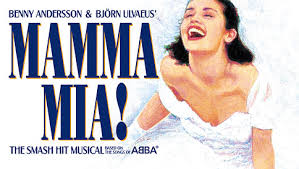
We concluded our US vacation with an unforgettable weekend in New York to celebrate Anette's 27th birthday. Mom, Dad and Granny drove up from DC, and Anette, Olivia and I took the metro from Brooklyn to the city, where we met up at The Scandinavia House for a traditional Norwegian dinner. Afterwards, we took a cab to the Winter Garden theatre, where the huge marquee for Mamma Mia (music of Sweden's ABBA) stood out against the black skyscrapers and bright neon lights.
The show was phenomenal, with a great storyline and some hysterical acting, and a wonderful time was had by all. After the show we walked through Times Square, our eyes as wide as the horizon, trying to comprehend the enormity of light, sound and speed, amused by the people lounging in beach chairs in the newly created pedestrian section. I was so happy to walk with my grandmother, 91, at my side, and watch her enjoy the spectacle.
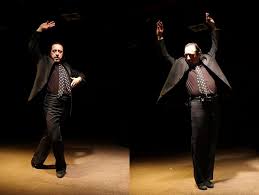
We said goodbye to the "old folks" at their hotel and continued on to W 38th and 8th, where we spotted a dimly lit marquee for the Roy Arias Theater on the side of a nondescript office building. We had come to see our flamenco dance teacher, Jorge Navarro, a native of Granada who's been in NY for 25 years, perform with some of his friends. We took the elevator to the 6th floor, and walked out into a haze of smoke, sweat, loud conversation and guitars strumming. We entered the small, darkened room to find a lively audience of about 100 and a small stage with two guitarists, a singer, and three dancers.
What ensued was the most intimate, intense flamenco show I've ever seen. It is beyond me to describe every footfall, every touch of the guitar, every modulation of the singer's mournful voice, or the passion and emotion of the performers. Olivia, Anette and I were enthralled, in awe, sharing a delicious feeling of having stumbled upon this most underground and most authentic of Andalucian experiences, right in the middle of NYC. Viva la Gran Manzana, y viva el flamenco jondo!
Monday, May 25, 2009
Hospitals North and South

When I returned from Tanzania I found out I had finally gotten malaria (probably in Malawi) and as luck would have it, I got the potentially fatal kind, falciparum. Fortunately, the regional hospital here in Haugesund is totally modern and well-equipped, and one of the doctors is a tropical disease specialist. Thanks to her, the malaria was properly diagnosed, and after four days straight of IV treatment in both hands (and 10 blood tests over those 4 days - I'm no longer afraid of needles:-) I began to get better.
Contrast my experience with that of the average Tanzanian who gets sick or has to go the hospital for any other reason. The NYTimes is beginning a series of 3 articles on childbirth and maternal death in Tanzania, and I highly recommend it. The pictures are particularly gripping, but I can't copy the best ones to put on the blog, so here's the link to the article.
Monday, May 11, 2009
Out of Africa
Well, I never got around to posting again from Tanzania; internet was just too hard to come by. Anyway, we're back now, but here's a clip of our last night in Iringa.
Subscribe to:
Posts (Atom)