Sunday, April 20, 2008

Bagamoyo’s Artists


Each time we are in Bagamoyo we take ngoma lessons. Ngoma is a Kiswahili word that encompasses drumming, dance and traditional music. Ally Zakoo and Shabani Mbatta (whose father is a teacher at the College of Arts) know ngoma inside out – they were born in Bagamoyo and have been playing the traditional music of Tanzania their whole lives. Now in their mid-twenties, they have set up a drum and dance workshop to teach cultural history and social issues to local schoolchildren.

Ally and Shabani play with incredible skill and pure joy, and they make their own drums; we play amidst piles of coconut wood shavings in the shade of a mango tree. On our last trip to Bagamoyo, Anette and her brother André played every day and gave excellent performances at the end of each lesson. After three days with these master teachers (who don’t have teaching degrees, mind you, just an infectious passion for what they do) André went from total beginner to confident drummer.

Vitali Maembe is a different kind of ngoma artist. A unique singer-songwriter in his early thirties, he writes socially conscious songs dealing with corruption, political violence, poverty and AIDS, among many other themes. A radio station in Dar “lost” his album after the firing of President Kikwete’s cabinet, and at a recent performance attended by several government ministers the microphone was taken away from him when he began singing ‘Afrika Shilingi Tano,’ a song enumerating the reasons Africa is perpetually drenched in blood.

In one part of the song, Vitali describes a conversation between Chinua Achebe and a writer from Sierra Leone, who laments that the white man came and killed his father and raped his mother. Chinua responds: “at least you haven’t lived to see the day that your own African people do those very same things to your family.” I guess this type of honesty isn’t what government ministers want to hear.

Vitali is also a painter. He sketches his ideas whenever they come to him but only paints once a year, filling 30 or 40 canvasses during a two-week reverie. His paintings depict the same themes that are present in his songs, and they are wonderfully colorful and sensual.

Mwandale Mwanyekwa is a sculptor who studied in Bagamoyo and is currently featured with other women in an exhibition entitled “Women are Creators” at the National Musem of Culture in Dar es Salaam. It’s hard to say what was more beautiful, her style or her art. Her clothing, jewelry and sculptures are all expressions of the same spirit – the spirit of the African woman, strong and beautiful.

The exhibition was unique because only female sculptors were represented, and all the pieces focused on the world seen from a woman’s perspective: the special relationship between a mother and her child, daily tasks such as fetching water or cooking, all done with a baby wrapped to her back. One of her most striking pieces was a wooden African continent on which she carved her own profile encircled by the words “Women can create change.” As she told us, the goal of her art is to empower women by celebrating their strength, grace and wisdom, qualities that are imprinted in each of her sculptures.

Artists like these are fundamental to change in any society. Where would we be, for instance, without Bob Dylan, Joan Baez, Arlo Guthrie, Neil Young and the countless other musicians who helped change American consciousness in the 1960s? Artists, like all people, draw inspiration from working together, and as their ideas merge and evolve, events like Woodstock are born. For this reason, Bagamoyo’s College of Arts is so important to the future of Tanzania - all the more so because there are so few schools like it in all of Africa.

Ally, Shabani, Vitali and Mwandale all studied at the College of Arts and have worked together on each other’s projects, just as Federico Garcia Lorca, Luis Buñuel and Salvdaor Dali formed their artistic identities while living and working together at La Residencia at the University of Madrid in the 1920s.

Much of Garcia Lorca’s energy in his last few years was spent touring with his theater company to culturally isolated parts of rural Spain. Interestingly, graduates of the College of Arts are meant to take their art to other parts of Tanzania to give workshops and set up schools of their own. Unfortunately the government doesn’t have the money to employ many of the graduates, but judging by the enterprising nature of Ally, Shabani, Vitali and Mwandale, Bagamoyo will continue to produce amazing artists for generations to come.

Sunday, April 13, 2008

Bagamoyo: The Berkelee of Tanzania


A crescent moon of sand reaches gently out into the Indian Ocean as if trying to touch Zanzibar, 20 kilometers to the east. Palm trees with gracefully arced trunks line the beach creating the perfect sunset panorama. Fishermen sit on buckets scaling their fish while women crowd around in their colorful kangas bargaining for the best price. A 15-foot hammerhead was caught today, sprawled on the beach it still seems alive with otherworldly power. A herd of insanely long-horned cattle are driven down the beach and into the surf by a couple of barefoot teenagers. Having never seen cattle on a beach, we asked the locals what was happening.

“They’re going onto the boat.”
“The boys?”
“No, the cows.”

In Norway, picturesque cows dot the mountainsides that crash down into the fjords, and you can imagine that if a Norwegian farmer ever decided to move his cattle by water, he’d have a big iron ship waiting to transport them. But this is Bagamoyo, Tanzania, East Africa, and the boats here are still made the same way they were thousands of years ago. The long wooden dhow with its single sail gave medieval Arabs supremacy over the Red Sea trading routes, and is still used daily along the Swahili coast from Somalia to Mozambique.

Historically infamous as the starting and ending point of the Arab slave route across Tanzania into Central Africa, Bagamoyo (which means “lay your heart down”) is fast becoming one of our favorite places in Tanzania. We first came here in December on the recommendation of my good friend Jake Thomsen, who found out about Bagamoyo when he came to Tanzania in 1999. Jake took six weeks of drum lessons and was told by his teacher of a music school where the students start their day by drumming on the beach at sunrise, singing into the wind, then diving into the ocean. He then called his parents and said he wouldn’t be returning to Brown for his junior year.

Fortunately for me, Jake came back and taught me how to play the djembe. After college he enrolled at the Berkelee School of Music and I was enticed to move to Boston so I too could play music 8 hours a day. Bagamoyo’s Chuo cha Sanaa (College of Arts - LINK) is Tanzania’s answer to Berkelee. Founded in 1981, it is one of very few arts colleges in all of Africa. Its teachers comprise the Bagamoyo Players, who have performed the music of Tanzania’s 125 ethnic groups at concerts all over the world. For those interested, I highly suggest that you download their 2006 release “Tramo” on iTunes.

Every year, the College of Arts hosts the Bagamoyo Music and Arts Festival (LINK), an event that draws performers from all over Africa and tourists from all over the world. It’s a week of round-the-clock performances and bonfires on the beach, and we’re determined to make it this year. It will be October 14-18, anyone want to join us?!

As if this weren’t enough to make us fall in love with Bagamoyo, it turns out that Norway has been supporting the College of Arts for about a decade now. There is an exchange program for students and teachers of the University of Stavanger to study and work in Bagamoyo, and NORAD (LINK) money helped produce the “Tramo” album. Consequently, many locals know how to say “kjempebra” and “tusen takk,” and we share many a laugh while sitting under the stars at the local café, mixing languages after a day of drumming and singing.

Thursday, March 20, 2008

Ruaha: Most Beautiful Place On Earth?


Ruaha National Park after the annual rains is an absolute Garden of Eden, a living landscape in the peak of health and beauty. Its lifeline, the Great Ruaha River, which has dried up every year since 1994 due to environmental damage caused by rice farming and cattle grazing, was flowing at full capacity when we visited this weekend.

The park is 50,000 square kilometers of natural stillness; the only sounds are wind and water, birdsong and animal call. Elephants spend hours every day rejoicing in the river, trumpeting their delight. Giraffe and zebra congregate by the hundreds along the riverbank to graze on the effusive greenery.

Guidebooks tell you not to come in the wet season because the bush is so thick that animals are difficult to see. Maybe we got lucky, but in addition to the grazers we saw thirty lion, three cheetahs and a leopard in a baobab. Of course, we wouldn’t have seen half of these animals without the incredible eyes, experience and instincts of our guide and driver, who has become a good friend since our first safari.

He routinely spots animals that are completely camouflaged, hiding in thick bush, or lying down behind baobabs - at a distance of 100 meters while sitting down and driving!
But then again, he is an extraordinary man by any measure.

After graduating from primary school at the age of 12, he spent the next ten years of his life working as a gardener and caddy on a golf course in the tea-estate highlands of Mufindi. He learned so much English from the golfers that one day his boss asked him if he wouldn’t like to take a new job as a guide in Ruaha.

This was in 1984, when the first tourist lodge in the park was being built. 24 years later, his knowledge of Ruaha is unparalleled. Having learned about local flora and fauna from his uncle as a child, he studied field guides late into the night in his first years as a guide, and so learned to recognize thousands of plant and animal species, and name them in three languages: his native Hehe, Swahili and English.

We look forward to each safari with him because we learn so much and because he radiates kindness and positive energy. Now in his mid-40s, he is happily married and has four young children who want to grow up to be park guides just like their dad. His kids love watching the DVD we made after our first safari – it was the first time they had seen their dad on the job, and they constantly rewind it to see him driving the Land Rover. One of his dreams is to bring his whole family to Ruaha.

We’ll be offline for the next couple of weeks as we travel to the coast and then up north for our first look at Serengeti and Ngorongoro. World famous though they are, we’ve heard about the hordes of tourists and vehicles, and wonder how anything could possibly beat being alone with our friend in the sanctity of Ruaha.

Sunday, March 16, 2008

Corporal Punishment, Cell Phones and the Student-Centered Classroom

As in most countries in the world, students and teachers in Tanzania are late to school every day. Here, however, tardiness is the surest way to receive a beating – if you are a student. Tardy teachers are rarely if ever reprimanded. This reminds me of American teachers who talk on their cell phones in class yet have no scruples about confiscating their students’ phones. Where’s the justice?

As a teacher who’s confiscated many a phone, and whose colleague once flung an old cell phone across the room so it shattered all over his dumbfounded students (who thought it belonged to a classmate) I’m not advocating for a free cell phone policy in our schools. I do, however, support equity in the application of certain rules for teachers and students. “Do as I say, not as I do,” has never worked for anyone I know.

Teachers, although underpaid and overworked, are respected role models in all human societies. Julius Nyerere, the “father” of Tanzania, is often referred to as Mwalimu (teacher) and his picture is still displayed prominently in every school and public building in this country.

I just read that some NYC schools are considering paying teachers $125,000 per year, and this I heartily applaud. Others are considering giving students financial incentives for good academic performance, and this I vehemently disagree with. In my opinion, the deepest learning comes when students are internally motivated. Motivation, like intelligence, manifests itself differently in every student, and it also changes over time.

Teachers, therefore, must be able to gauge the interests of their students and structure school-time accordingly. Administrators who have wrongly conceded to paying students who perform well are undermining the teaching profession and giving in to the material culture of America. It would be unthinkable for Tanzanian students to receive money for stellar academic performance. In fact, most Tanzanian teachers refuse to attend workshops unless they know they will get paid (this is a huge problem for NGOs trying to disseminate ideas here).

This brings me to the question of participatory learning, and ultimately, participatory living. American schools are some of the most creative in the world, and for all we do wrong, most teachers I know try their best to engage students and help them to take responsibility for their own learning. Our students rarely hesitate to question the teacher or speak their truth in the classroom, for they know the classroom is theirs.

Tanzanian students, on the other hand, rarely speak up in class. If they do, they may get beaten for giving a wrong or inappropriate answer. Tanzanian law mandates that no more than four strokes per offense be doled out to students, and only the headmaster is allowed to give beatings. Few if any schools actually adhere to this law, in fact, some have creative ways of getting around it. If a student is to be beaten, he or she will often receive two or three strokes from one teacher, then get passed on to several others.

The reason for this discipline is not just numbers. Sure, some may argue that hitting is the only way to maintain order in a class of 120. However, the passivity of so many students cannot solely be explained by fear of punishment; it lies in culture and the educational system itself, which still operates on 19th century assumptions. Add to this the appalling and inexcusable lack of resources, and you get crippled classrooms.

Anette astutely observed that the level of control exerted over students in school stands in stark contrast to the enormous responsibilities – and trust – that Tanzanian children are given every day. Where in America do you see a four-year old child shopping for the family needs at 9 o’clock at night? You don’t. We’re too paranoid and America is too dangerous - a cozy symbiotic relationship that keeps people in fear of each other and the world. In Tanzania, children are cared for by the entire community and there is very little violence on the streets.

Tanzanian children run their family’s shops, are used to hours upon hours of manual labor, and are respectful of their elders. By doing all of these things they earn the respect and trust of their communities, and are never “babied” the way so many American kids are. Why, then, don’t Tanzanian teachers entrust them with similar responsibility in the classroom? It’s a question that will take more time for us to figure out, so please stay tuned.

Friday, March 07, 2008

The Primary School Blues


My last post was about a public school in a relatively wealthy village; last weekend I had lunch with three friends working for CIDA in poorer villages in Iringa district, and they gave me an even bleaker picture of public education here.

Primary schools are the most neglected because they are free for all Tanzanians; consequently, families don’t feel that they are losing anything by keeping their children home to work on the shamba. This is of course true of many migrant and farm-working families in the US and all over the world; when the harvest needs to be brought in, all available hands must help. Indeed, our summer vacation is a holdover from a time when a majority of Americans lived on farms.

However, students aren’t the only ones who skip school to work on the shamba – teachers do it, too. On any given day several teachers may not show up for work because they have decided to stay home and do the weeding. If none of the teachers show up (and this happens all too often) the students just sit idly on the dirt floor of the classroom or run around in the schoolyard. But they do stay close the school in hopes that their teacher will show up.

At one primary school Anette visited with FORS, teachers sleep on the classroom floor at night because they don’t have money for a hut. The day she showed up school was closed because it was payday for teachers in Iringa town, but as soon as the car came within sight of the school dozens of children came running up to the car, waving their reused notebooks in the hopes that they would have school after all.

Again, cultural relativism is necessary in thinking about this situation: primary schools average 100 – 120 students per class and teachers are barely paid enough to stay alive. So if you were faced with the choice of going to work to teach 120 students with no books and no blackboard, or weeding and watering your shamba to make sure you’ll have enough food to survive the hungry season, what would you do?

Tanzania’s current primary enrollment is between 80-90%, but the secondary enrollment is a mere 25% (http://www.tanzaniaembassy-us.org/government/). Of these 25% most are boys; because of traditional gender roles, girls are expected to the bulk of the work at home. Some families want to send all their kids to school, but simply cannot afford it and thus prioritize the boys.

The good news is that those who do study at the secondary level benefit from smaller (70) classes, more resources and more teachers. Most teenagers in Iringa town go to secondary school, and many of our friends here are studying at one of Iringa’s five universities. Two college students in Dar started a website called JamiiForums, a free speech free-for-all whose discussion board debates about corruption led to the recent firing of many top government officials.

Contrast this with the fact that after independence most African countries had so few highly educated citizens that important jobs in business and government were often filled by people with a primary school education. Zambia had about 1,000 high school graduates in 1961 – imagine running a country with that talent pool. Uganda’s Idi Amin completed 7 years of education and later joined the army – a deadly combination.

With the Kenyan political crisis now diffused, thanks in large part to two highly educated Africans - Kofi Annan and Tanzanian President Jakaya Kikwete - East Africa can continue the vital work of addressing the challenges, like high quality education for all, that all societies struggle with.

Sunday, March 02, 2008

A Public High School in Rural Tanzania


Idodi Secondary School serves 800 students from several villages on the outskirts of Ruaha National Park. 500 of these students are boarders, and their colorful school uniforms are eternally strewn over every bush and branch near the dorms, hanging out to dry after a thorough hand-washing. The boarding students receive three square meals a day, lining up by the hundreds (see pic) at a long tin-roofed shack under which ugali is cooked on small charcoal-fired stoves. On a good day the school has 15 teachers, so average class size is about 70. On pay days the school shuts down because the teachers have to take the long bus ride to Iringa (read my last post) to get their money.

At Idodi Secondary as at every other African public school, teachers beat their students. Our host, a 26 year-old social studies teacher, seemed young and progressive enough to understand our opinion that beatings are old-fashioned and harmful to the kids. No way. When you’ve got a class of seventy students and four books to share among the lot of them, beating is the tried and true way to maintain order. Besides, he said, he never feared the beatings his teachers administered to him when he was young - in fact, it made him study harder.

Perhaps that is why, as evening fell and the generator switched on, hundreds of students gathered in the dimly lit classrooms to continue studying well into the night. Or maybe it was that those students didn’t get a chance to look at the books during class time.

For me, cultural relativism is vital to thinking about this situation. I come from a country where a teacher would quickly be jailed for striking a student. I also come from a country with a stranglehold on the world’s resources, whose privileged students are coddled from birth to ensure they make it into $40,000 a year schools, and whose minority students are devalued at every level of the educational system. With so much, we achieve so little. Classrooms are filled with the latest technology, yet few students can be convinced that school is a place they might enjoy, let alone a place where they might choose to spend hours studying every evening.

Maybe it’s just human nature – the more you have, the lazier you get; the less you have, the harder you work. The sad thing is that even for those Africans who graduate from university, paid work in their field is often impossible to come by. I’m reminded of the Zambian trucker who gave us a hitch back to the TZ border. A trained social worker, he was forced to start his own trucking business because of lack of work. Not that there’s not a need for social workers in Africa, there’s just no one to employ them. So now this well-educated man drives his dangerously old truck 1800km twice a week from Tanzania across northern Zambia to the DRC and back, peddling dried fish, soap and candles to a people whose government can’t meet their basic needs for safety and sustenance.

Sunday, February 24, 2008

The bus to Idodi


Last weekend Anette and I traveled to Idodi, 90km northwest of Iringa and 20km outside Ruaha National Park, where Anette helped facilitate a head teacher’s meeting for Friends of Ruaha Society at Idodi Secondary School. In a Land Rover the trip takes about an hour and a half, but I went by the only public bus that serves the villages near Ruaha and it took me five hours.

It was the worst bus I’ve yet been on in Africa – listing heavily to one side, holes rusted in the floor to give you a good view of the road beneath your feet, every window shattered like broken ice on a shallow pond. The window in my row of seats was half knocked out, the remaining glass turned inwards and barely hanging on, threatening to fall on and slice the next passenger. Large pieces of glass were scattered all over the floor of the bus, which had not been cleaned out in years.

First we waited at the bus station for a half an hour as the engine roared and smoked and I watched the rain slant through my broken window and soak the seat next to me. Then we started moving, but it was only to drive 20 meters back into town to a gas station, where it took us a half hour to fill up our 100-liter tank. As we waited, I watched a young man fill an old container with petrol and tie it fastidiously to the frame of his bicycle, and I wondered what would happen if he were to fall off his bike.

Finally the tank was full and off we drove, but alas, it was back the 20 meters we had just driven to stop for more passengers to cram themselves in like sardines. I couldn’t help but laugh out loud as I realized that after an hour we had gone in a 40-meter circle and were no closer to our destination. But such is African transport, and I was happy to be going out to Idodi.

The road is paved until about 15km outside of Iringa, and then it gets rocky and sandy, which is the rainy season means rocky and muddy. After two hours of being bounced around I was positive I couldn’t hold my bladder in such conditions any longer, and I prayed that we would get stuck so I would have a chance to get out and pee. My prayers were answered, for soon thereafter we heard a CLUNK and felt the whole bus grind to a halt. Sure enough, we were stuck in the mud and I was overjoyed. I navigated my way down the aisle over 50kg bags of maize flour (used to make the Tanzanian staple ugali) and plastic bags bursting with tomatoes and onions sold by side of the road vendors, and I leapt into the bush to relieve myself.

The driver and his crew were obviously prepared for such delays because they immediately broke out the shovels and began digging away to level the mud underneath the giant bald tires of the bus. After about ten minutes half the passengers got behind the bus and began pushing as the driver revved the engine. Slowly the bus lurched over the humps of mud and with the passengers jogging alongside we made it to drier ground.

At another one of our unplanned stops I saw two hands grab onto a window from the outside, and then watched as a man hoisted himself onto the roof of the bus. A bicycle was then lifted up to him and we took off down the road. I forgot all about him until about fifteen minutes later when the emergency hatch opened and suddenly two legs were dangling above my head - the guy jumped down from the roof, through the hatch and into the bus at speed!

My only regret is that I did not have our camera with me, so I will have to keep the images of rainy, muddy Iringa as seen through a jagged windowpane in my head until our next bus adventure. For those who know Spanish, this picture of another bus will provide some laughs - the "super ugly" express!

A Child Soldier in Sierra Leone


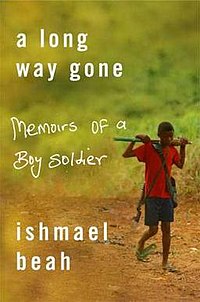
Upon returning from Idodi yesterday I read the last two chapters in A Long Way Gone: Memoirs of a Boy Soldier, by Ishmael Beah, published just last year. It is one of the most gripping, horrifying accounts of war I’ve ever read, and I highly recommend it to anyone interested in learning more about Africa. I shudder to think that I was barely aware of situations like Sierra Leone and Rwanda when I was in high school; people my age trying to survive in those countries were exposed to the absolute worst of human nature, while I was afforded the privilege of a safe suburban upbringing.

Is it the accident of birth, as my grandmother used to say, that determines who experiences what in this world? To a certain degree I believe this to be true, which is why it is so important to travel – in books, on foot, in movies, or by dalla-dalla – and get a sense of what other people’s lives are like. Here are some other books I’ve read this year that have given me insights into the African experience:

When Victims Become Killers (Rwanda) – Mahmood Mamdani
How Europe Underdeveloped Africa (historical) – Walter Rodney
Into Africa (Livingstone & Stanley) – Martin Dugard
The Zanzibar Chest (Ethiopia, Somalia, etc.) – Aidan Hartley
The Africa House (Zambia) – Christina Lamb
Dark Star Safari (Cairo to Cape Town) – Paul Theroux

CAC Swimming Champs '08


The Capital Athletic Conference (MD, DC, VA, PA) Swimming Championships finished up last weekend, hosted by my alma mater St. Mary’s College of Maryland. Six years ago, when I was a student and swimmer there, we couldn’t have hosted the event because we had just one 25-yard pool. Now there’s a state-of-the-art natatorium and SMCM have become annual hosts. Our women did well, the men are improving, and no one in the CAC this year beat my times from 2002: 59.29 in the 100 breast and 2:10.07 in the 200 breast. One year I’ll make it back for Alumni Day to see the new pool and see if I can still hang with any of the current swimmers.

Saturday, February 23, 2008

Citizen Journalism: uandishi wa kiraia


Last Wednesday my senior classes were honored to have Maggid Mjengwa, Tanzanian journalist and blogger extraordinaire, talk to us about citizen journalism. He took this picture, and here's what he posted in Kiswahili on his blog about the visit:

Leo nilipata bahati ya kualikwa Iringa International School kuongea na wanafunzi wa sekondari juu ya dhana uandishi wa kiraia (Citizen Journalism). Natumia fursa hii kuwashukuru wanafunzi hao kwa kuniuliza maswali mengi na kushiriki kikamilifu katika mazungumzo yetu. Wengi wa vijana hao pichani wana blog zao.

Rough translation: Today I had the opportunity to visit IIS and talk to the senior students about citizen journalism. I would like to thank the students for asking many questions and participating actively in our talk. Many of these youths have their own blogs.

You can visit my students' blogs, which they created in our IT class, by going to http://globalfriendszone.blogspot.com
From this student's site, there are links to all the other students.

Thursday, February 21, 2008

Ole Einar Bjørndalen


I know it's quite a leap from Kenyan violence and sustainable development to the relatively esoteric sport of biathlon (skiskyting) but if this blog is to be a reflection of my life and interests, then this post is long overdue. I moved to Norway in January 2004 to live with Anette and was immediately drawn into the world of biathlon. I quickly realized that Ole Einar was one of those athletes at the absolute pinnacle of his sport - so good his every move seems effortless, head and shoulders above the rest of the competition. This was also the time that I learned to cross-country ski (at the age of 24!!) and as my love of zooming through the snow-blanketed Norwegian forests grew, so did my love and respect for the sport of biathlon.

Four years later I'm as mad about biathlon as I was about baseball as a kid growing up in Maryland. Although I'm living in Tanzania and don't have a TV right now, I still managed to check the results of the recent IBU Biathlon World Championships online. Ole took gold in the pursuit, but was surprised by his 22-year old teammate Egil Hegle Svendsen in the sprint and the mass start. It was an auspicous week for the future of Norwegian biathlon, and should make for an exciting '08-'09 season leading up to the next Winter Olympics in Vancouver in 2010.

As I was digesting the news of Svendsen's improbable victories over his mentor, I realized why baithlon has smitten me the way it has - it's so much like swimming! For fifteen years I trained alone in pools all over the East Coast and lived for those few minutes of all-out competition at championship events. Although my teammates are lifelong friends and we shared the unique camaraderie of training and competing together, swimming is ultimately not team sport, it's intensely personal. There's no comparison to football, baseball, basketball, etc. So when I watch Bjørndalen gliding through the forest, then stopping alone to shoot down his targets before his competitors arrive, I get flashbacks of the 200 breast, my pull-outs, my turns, my strokes per length, and I am transported in that way that only sports can trasport a person - to the sublime!

So here's to Biathlon, Norway, Swimming, and the endless pursuit of self-improvement. It took me 15 years to break a minute in the 100 breast, and Ole Einar's got his eyes on gold in Vancouver.

Tuesday, February 12, 2008

The keys to sustainable development


Relationships and time, according to Andy Hart, are the two essential ingredients in a successful development project. So we learned today on our Geography class trip to Ismani village, located half an hour outside of Iringa on the tooth-rattling road to Dodoma. Andy, a British veterinarian and CMS missionary whose wife started Neema Crafts, took five students and me to see his development projects in the village, which include chicken vaccinations, cattle dip tanks, solar water disinfection, solar panel distribution, and most recently, bat farming.

Chicken vaccination is always the first project Andy implements in a new village. The average family in rural Tanzania usually keeps at least six or seven chickens, but is rarely able to increase that number because 60% of the chickens die every year from Newcastle disease (kideri in Kiswahili). For 2,800 Tsh, or about $2, Andy buys a vial of vaccine in Iringa and takes it to a village. There, he trains a local team to be vaccinators and community organizers. The team goes around to all the houses in the village and tells the families to keep their chickens inside that night; the next morning, the team comes to each house to catch and vaccinate the chickens.

Catching chickens, as anyone who grew up on a farm will know, involves diving behind chairs, under beds, and even climbing into cupboards. Once all the chickens have been vaccinated in this manner, the team has not only performed an invaluable veterinary service to the chickens, but they have (unbeknownst to the families) been able to assess the poverty level of each family in the village by looking for radios, lamps, water filters, and other possessions that indicate standard of living. If something troublesome catches their eye, they simply ask the family for a cup of tea, and then sit down to talk about it.

Once Andy chased a chicken into a grain silo and found a seven-year old child lying in the dark in a straw basket. The boy was born disabled so the family hid him away - common practice in a country with no social services and massive prejudice against disabled people. The neighbors didn’t even know the boy existed. Now, after two months of physical therapy, the boy is able to walk and will hopefully begin school soon. Contrast this with the highly paid mzungu who drives up in a shiny Land Rover to ask the families why they are so poor. Get it? Relationships. Catching chickens is everyday business, and villagers helping vaccinate chickens talk more honestly with each other than they ever would with an outsider with zero knowledge of their community.

The results of the vaccination program are astounding; many families see their chicken population quintuple within four to six months. Once these families have thirty or forty chickens running about the shamba, their children’s protein intake increases, which in turn improves their performance in school. Some families are inspired to entrepreneurialism, selling chickens for pigs, and pigs for cell phones and tin roofs that won’t leak during the rainy season.

Because of its quick, concrete results, the chicken vaccination program is the perfect way to gain villagers’ trust, and more importantly, for them to develop a new outlook on their own possibilities. With more money, a more comfortable home, and healthier children, villagers are much more inclined to listen to the next project Andy proposes, like cattle dip tanks, for example.

Cattle Dip Tanks


When Andy first started working in Ismani five years ago, the cattle dip tank that served the surrounding villages was falling apart. When the villagers came to him and asked how they could get a new one, he invited all the cattlemen to a meeting. Sixty four cattlemen showed up, and instead of being given a handout, Andy told them to go back to their villages and see if they could rustle up the materials – sand, bricks, wood, tin – to revitalize the dip tank. His only contribution was a few bags of cement from town. Three weeks later, the new dip tank was servicing 500 head of cattle per morning.

Now, the surrounding villages only lose three head of cattle per year, compared to 105 per year before the tank was renovated. Furthermore, the tank is making a handsome profit (about 200,000 Tsh per year) for the council of cattlemen elected by their peers to oversee it, and they are planning use this money to protect the spring from which everyone in the area gets their drinking water. My students and I crouched down at the spring, which is nothing more than a faint trickle, and tried to scoop up the water with our hands – no luck.

Andy explained to us that the cattle arrive first in the morning, drinking, urinating and defecating in the water, and then the villagers come to fill up their water jugs by using their hands or small spoons. One can imagine the extra hours of work this entails, not to mention the deadly diseases passed from home to home by this water. The council’s plan is to create three concrete tanks that will fill up overnight, so that the cattle can’t get to the spring in the morning and the people can simply turn the tap and fill their jugs in a matter of minutes.

The Tanzanian government, interestingly, has also launched a campaign to renovate dip tanks, but in contrast, they use 10 million Tsh - per tank. As much of that money goes to outside contractors and corrupt officials, I doubt there is any money for the local to reinvest in frivolities like protecting their drinking water.

SODIS: Solar Disinfection of Water


SODIS solar disinfection of water is perhaps the cheapest and easiest to implement of all Andy’s projects: fill a bottle with water, leave it in the sunshine for a few hours, the water heats up, the parasites die.

I’ll get to the specifics in a bit, because it’s a bit more complicated than this, but consider the fact that most African villagers use charcoal (which means they cut down all the trees in their shamba) to make their water safe for drinking. Now consider that more women and children die in Africa each year from smoke than from malaria. No, I don’t mean cigarette smoke (thankfully, this is one category in which Africans are world leaders) but smoke from cooking fires, which is inhaled at close range by women and children on a daily basis. One-week old babies, wrapped tightly against mother’s back as she stirs the evening meal, are powerless to stop the smoke from entering and destroying their tiny lungs. Respiratory systems are severely damaged, leading to an overall reduction in immune system efficiency and an ultimate death from flu or pneumonia.

Can these deaths really be prevented just by putting bottles out in the sun? Andy believes so, and so do the thousands of villagers in the Iringa region who he has helped to begin purifying their water by using SODIS technology. Ideally, the bottle should be between 1 and 2 liters in capacity, and should be placed on a strip of corrugated metal to help the water heat up faster and more thoroughly. This allows the water to reach 30 degress C, at which point all harmful parasites die. Two hours of direct, hot sunshine will do the trick, but six is better.

But where can the villagers get corrugated metal and plastic bottles? Half the mud huts in these villages are roofed with corrugated metal, so there are always scraps lying around, and there just so happens to be a spring water-bottling factory (Maji Afrika) not 30km outside Iringa. These bottles are usually chucked from bus windows (like the blue plastic bags that blight the gorgeous African landscape) or into burn piles where they leach their poisonous chemicals into the atmosphere one way or another. So instead of degrading the environment with these bottles, we can actually beautify the land and save people’s lives while we’re at it.

Andy has introduced this concept to dozens of local schools, ensuring that each child places a full bottle of water on the roof of the classroom in the morning, so that when school ends he or she can take a bottle of clean water home for the night. Anette and I have been using SODIS here at home in Iringa for several months now, and we would like to help students at all 23 of FORS’ schools in Idodi and Pawaga to do the same thing.

Thursday, January 31, 2008

Our Kenyan Neighbors


What to say about our neighbors, Kenya? The historical reason for the violence is the same as why most of the rest of Africa is drowning: colonialism and slavery. Country lines were drawn without regard to African interests, and ethnic groups were often forced by colonialists to occupy different spheres in the economy and society, thereby exacerbating inter-tribe rivalries. These truths are fresh in my mind after finishing "How Europe Underdevloped Africa" by Walter Rodney (thanks JQ).

Some editoralists in the local papers have said that Tanzanians (semi-jokingly) view the violence as proof that Kenyans are somehow inferior to Tanzanians, but if anyone entertained such thoughts in the first days after the election, my sense is that now everyone here is deeply concerned and empathetic. What has happened is horrific, but it is important to realize that it is not unthinkable. Yes, many are shocked that Kenya, bastion of African stability, is now devouring itself, but we should never think that such things are beyond the realm of possibility. Even Rwanda, where ordinary people carried out much of the killing, was not unthinkable. There are concrete causes - many of them rooted in Western oppression and indifference - to these periodic African, Latin American and Asian hemmorhages, and it is our responsibility as global citizens to work to reverse the conditions that produce such violence.

Many believe all it will to take to incite another Rwanda is for a group of young men with machetes to descend upon one of the camps where the quarter million Kikuyus are now living. Seeing as how the photo-op meeting with Annan hasn't helped matters in the slightest, and two ODM politicians have been murdered in the past two days, this is not an unrealistic scenario.

Our Tanzanian friends have mixed feelings about whether such violence could happen here - some say the country will implode in 5 to 10 years due to growing socioeconomic injustice, others say that because no ethnic group is more than 13% of the population, and everyone identifies through Swahili as Tanzanian, it won't happen. But Kenya is now the 4th of the 5 East African countries to be consumed by violence in the past twenty years - is TZ really so different?

I'm not sure what immediate action we can take to prevent the deterioration of the situation in Kenya, but I believe it involves a commitment to working together that most politicians the world over are sorely lacking. Why, then, must we wait around reading headlines about murder while our leaders refuse to act? In the Western world, I believe we're all too comfortable - until the violence reaches our doorstep, we prefer to sit on the couch (myself included - why didn't I do everything in my power to stop Bush from taking power in 2000?). Why, instead of going to war with Iraq, didn't the US government drop everything and send our resources to Darfur, or even New Orleans for that matter? Is it so hard to organize people on a mass level to produce positive change?

As our Peace Studies teacher Colman McCarthy would say, it's up to our generation to change things, and I am still hopeful that we can. ICOs (Impoverished Cesspools of Oppression - don't ever let yourself use the euphemism 'developing country') all over the world will continue to suffer spasms of post-colonial violence, but as our generation and our students' come into power, let's work together to ensure that the positive forces of globalization prevail, i.e., decreased racism, increased care for our brothers, sisters and our Mother Earth, and more social entrepreneurialism of the kind that can give an African family the start-up money it needs with the click of a mouse in Berkeley or Berlin. On that note, check out this website:

friendsofruaha.org

Anette just starting working there and I'm helping out on weekends, trying to bring solar disinfected water, SODIS, and solar panel technology to the villages around Ruaha National Park. Gotta start somewhere, and in my experience, that means small, personal and meaningful.

Saturday, September 29, 2007

Ruaha National Park


Last weekend we went on our first safari, and since neither words nor pictures can justly capture the experience, I took about an hour’s worth of video, which I’m editing down to 15 minutes or so. We went with Anette’s best friend from Haugesund, who is about to begin her sixth and final year of medical studies in Szcecin, Poland. Anette and I visited her in her first year there, so it’s only fitting that as we continue our travels, our path intertwines with the paths of those we love.
Another example: Summer of 2005 (as a new teacher) I went to Norway, then started my Master’s program at GMU, then visited Jake in The Gambia (one of the first posts on this blog). Summer 2007 I went to Norway, then Jake (as an RPCV turned teacher) and I took classes together at GMU, then we both went to Africa. Cosmic circles. I wrote a song about them at Walden Pond in the summer of 2002 when Jake and I lived in Boston; I’ve since forgotten the chords and lost the words, but the circles spread ever outwards, as Emerson wrote in one of my favorite essays – Circles (1841).
Now then, our safari. We woke up at the crack of dawn and were picked up by our driver, Esau, in his open-roofed land rover. Ruaha National Park is about 110 kilometers to the northwest of Iringa; 20 km of road are paved, the rest is sand and rocks (although still much better than most roads in The Gambia). We drove for three hours past villages of dilapidated mud and brick houses with falling-in grass roofs, past villagers pushing huge bundles of charcoal, firewood, or vegetables on their bikes towards the local markets, past fields of fruit trees, crops kept green by irrigation that has caused the Great Ruaha River to dry up in recent years, and yellow fields scorched by the sun and starved of rain. We ran over a Puff Adder on the road – they’re slow moving and often get hit by vehicles. We passed several overloaded buses filled with people (some sitting on the roof) and wares, and Esau confirmed what we’ve already seen on the roadways here – that these buses are dangerously topsy-turvy, and often flip over.
Upon entering Ruaha, we immediately saw a troop of at least twenty yellow baboons running over the rocks of a river pool, birds of all kinds and shapes (fish eagles, storks, etc.) on the banks of the river and in the trees, and hippos and crocodiles lazing in the water. We checked into our banda, prepared our bags and packed lunches and headed off on our first game drive full of excitement and wonder. Not five minutes away from camp Esau spotted a lion resting in the shade of a Baobab tree, and as he swung the land rover up over a rut to get a closer look - BANG! - the axle smashed into the ground, the engine began to roar, and the wheels spun uselessly. All this did not succeed in waking the lion, but it quickly became clear that we had lost our four-wheel drive. Fortunately we were able to drive to a workshop, where a clever fundi fixed the car in about three hours, during which time Anette, Klaudi and I sat on the balcony of our banda and watched the procession of wildlife come down to the river to drink – giraffe, buffalo, zebra, kudu, warthog, impala, etc. It was just as good as a game drive, but we were glad when Esau came back with the car.
I won’t go into the details of our day (that’s what the video is for) but I will say that luck smiled upon us, for we saw three cheetahs (rare and seldom seen in Ruaha) AND a leopard high up in a Baobab tree. Esau was ecstatic, because he has very rarely seen both of these animals in the same day in his twenty years of guiding in Ruaha. An enormous male elephant came within three feet of our car, and we caught an alpha male lion in the act - of mating, that is – and we caught it on video. The big game was indeed extraordinary, but as a beginning birder I was especially fascinated by the hornbills, rollers, and bee-eaters. The feeling of standing up in the land rover and holding on tightly to the metal bars while Esau sped along the dusty road to get us back to the banda before sunset, with the big African sun setting red over the acacias and the plains, just like in the logo for all the PBS Nature shows that I watched growing up, was quite unforgettable. A bit like flying, a bit like surfing, a bit like NOLS Alaska and the AT, and a whole lot like Heaven on Earth. Oh yeah, and lions woke us up at 5am running around outside our banda, making the resident hippo nervous and roaring so loudly that we thought they were going to jump through the thin screen and into our banda at any moment!

Tuesday, September 18, 2007

Iringa ni safi kabisa

So I tried to upload our first video about Iringa onto the blog, but East African internet couldn't seem to handle it. Hey, I'm not complaining - the fact we have internet at all is more than I expected. I haven't posted much yet becuase most of my thoughts are still in their preliminary stages. We're trying to figure out this new language, new culture, new rules, new people, and we're having a blast. Going on our first safari this weekend - maybe I can post some pics of lions after that.

Tuesday, July 24, 2007

The Operator


A slightly revised, faster, more eclectic version of what we played in high school...


Just as I prioritized flamenco over school this spring in Berkeley, this weekend I prioritized Meridian 2007 over grad school. Here is another one of our "classics" from twelve years ago - maximum respect to Eric once again for his incredible studio skills as a drummer, bassist, beatbox artist, and professional producer. The three of us played from midnight until 3am on Saturday, then from 10pm until 1am last night, and we had way too much fun. Then Jake and I got up early this morning to go to grad skool, where I gave yet another presentation. Finally going to finish the Master's on Friday - ole!! Always gotta make time for music, though. Thanks for staying tuned, y'all, I'll be posting from Tanzania soon...

Monday, July 23, 2007

The Funkmaster J.I.S. and his Big Red Wrench

This one's a little sloppy, but we were really tired last night...


OJO!!! ALL THESE SONGS WILL SOUND BETTER IF YOU HAVE GOOD SPEAKERS!!!! (my computer speakers are terrible).
Check out the new rhymes at the end of the song - but don't be alarmed when I talk about the developing world. All I'm trying to say is that it's a euphemism that makes it okay for us to go on eating our dinner in front of the TV and not do anything about the situation. Read my second-ever post on this blog (from 2005) if you want to learn more, and see pics of Ali and Baboukar.

Saturday, July 07, 2007

Original Meridian Pics from '95-'96


Just got back from twelve days in Norway: swimming and fishing in the fjords, and singing country songs with Anette (video to come???). Anyway, now I've started grad skool again (just three weeks to go) so I'll be too busy to post regularly, but in the meantime, here are some old pics of Jake and me and our band. Listen to Da Spanish Song, look at the pics, and that's pretty much what we were like back in high school!!